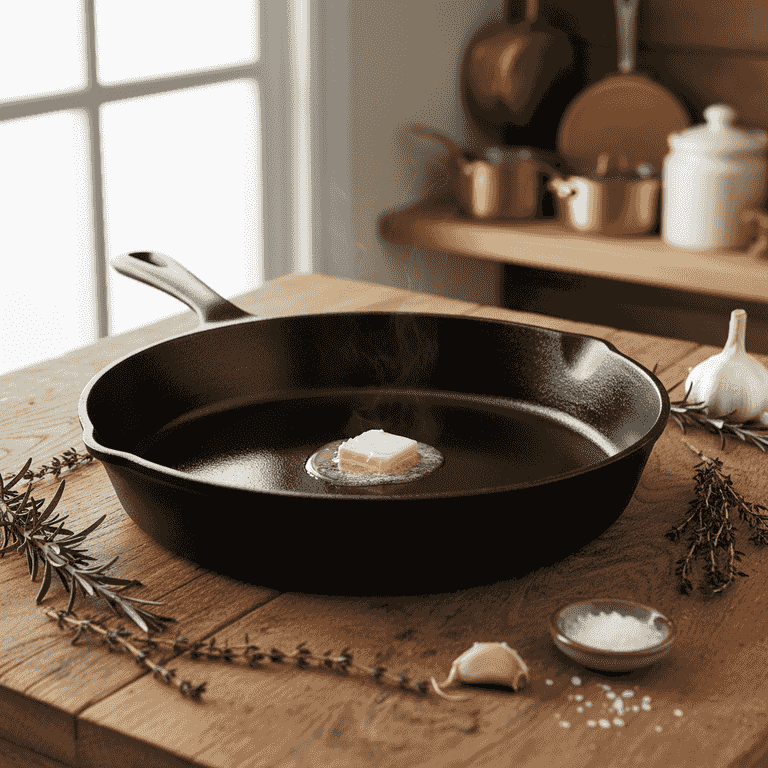
How to Restore a Cast Iron Skillet
Revive a rusted or neglected cast iron skillet by stripping away old buildup and applying a fresh, protective layer of seasoning. This process transforms a damaged pan back into a non-stick, lifetime kitchen essential.
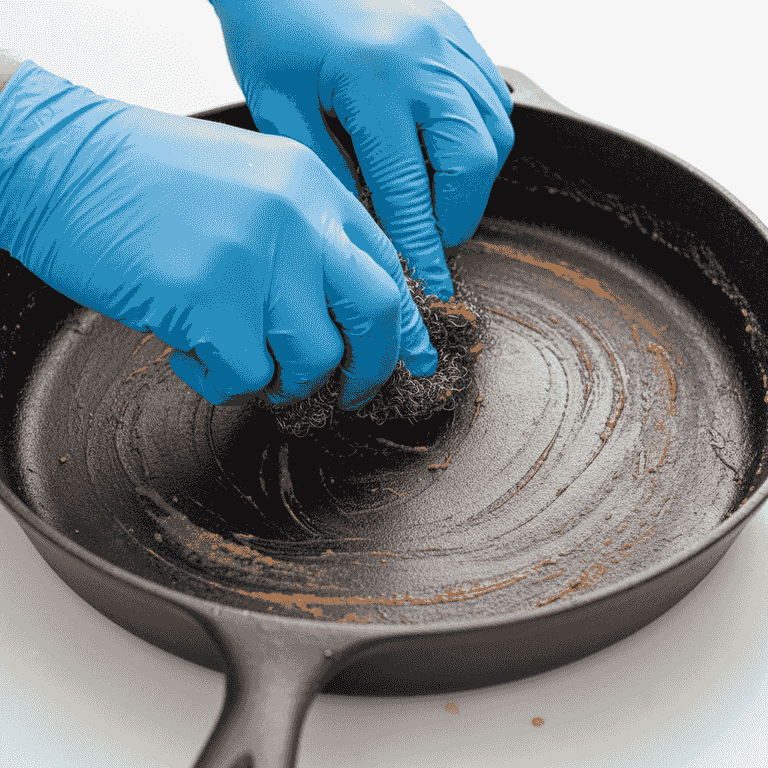
Strip the old seasoning
20 minutesScrub the skillet thoroughly using steel wool and dish soap to remove loose rust and flaking carbon.
Use firm pressure to reach all corners and the underside of the pan. This step is crucial to create a clean surface for the new seasoning to bond to.
Do not leave the pan in vinegar for more than a few hours as it can eat into the iron.
If the rust is severe, soak the pan in a 50/50 vinegar and water solution for one hour before scrubbing.
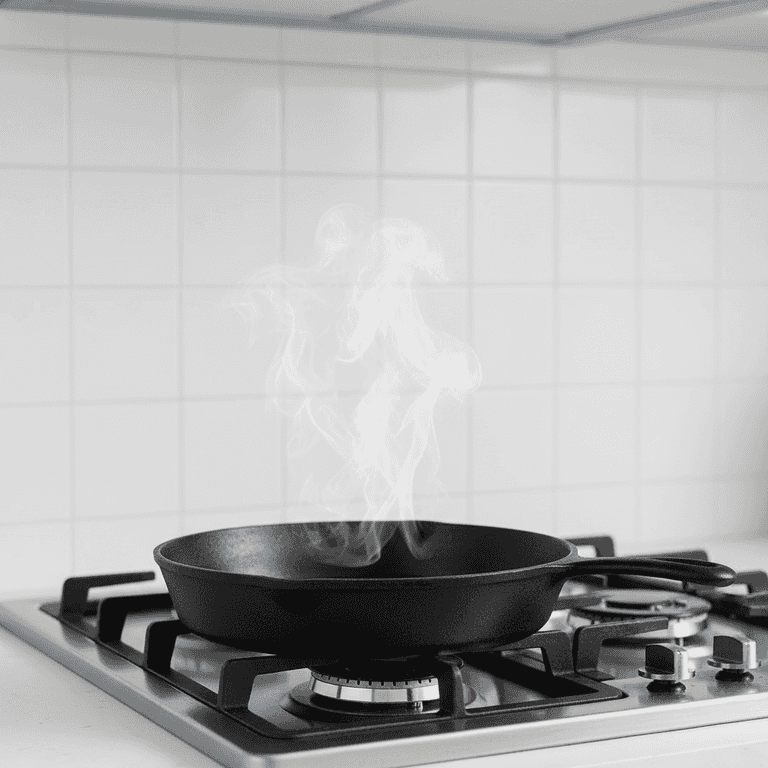
Dry the skillet completely
7 minutesWipe the pan dry with a towel, then place it on the stovetop over low heat for 5 minutes.
Residual moisture is the enemy of cast iron and will cause flash rust immediately. Heating the pan ensures every microscopic pore of the metal is bone dry.
Check for moisture by running a clean paper towel across the surface; it should come away completely dry.
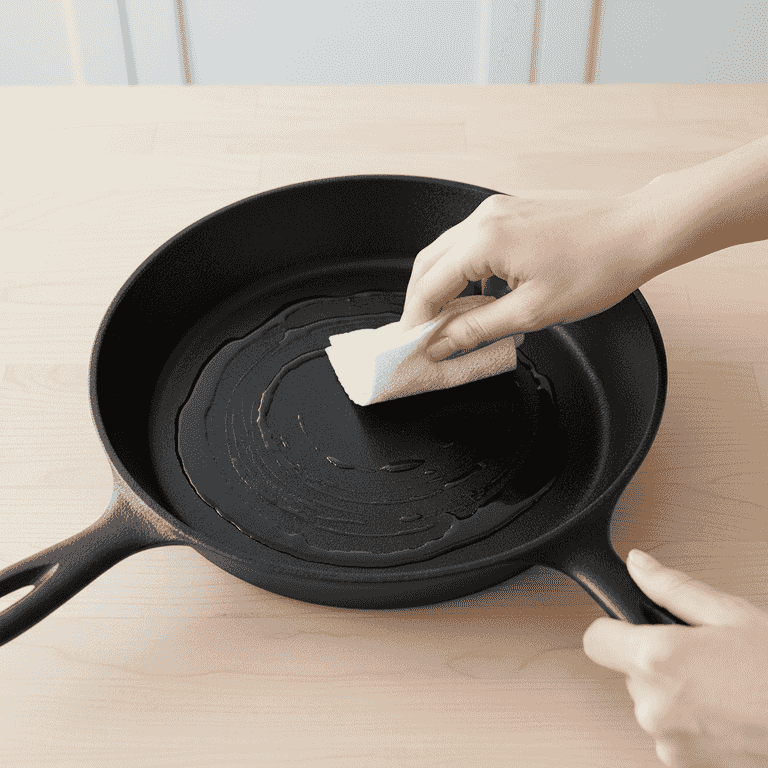
Apply a thin layer of oil
5 minutesPour a small amount of grapeseed oil into the pan and rub it over the entire surface using a lint-free cloth.
Use a fresh cloth to buff the oil back off until the pan looks almost dry. You want a microscopic layer of oil, not a pool, to prevent a sticky finish.
Use a high-smoke point oil like grapeseed, flaxseed, or canola for the best results.
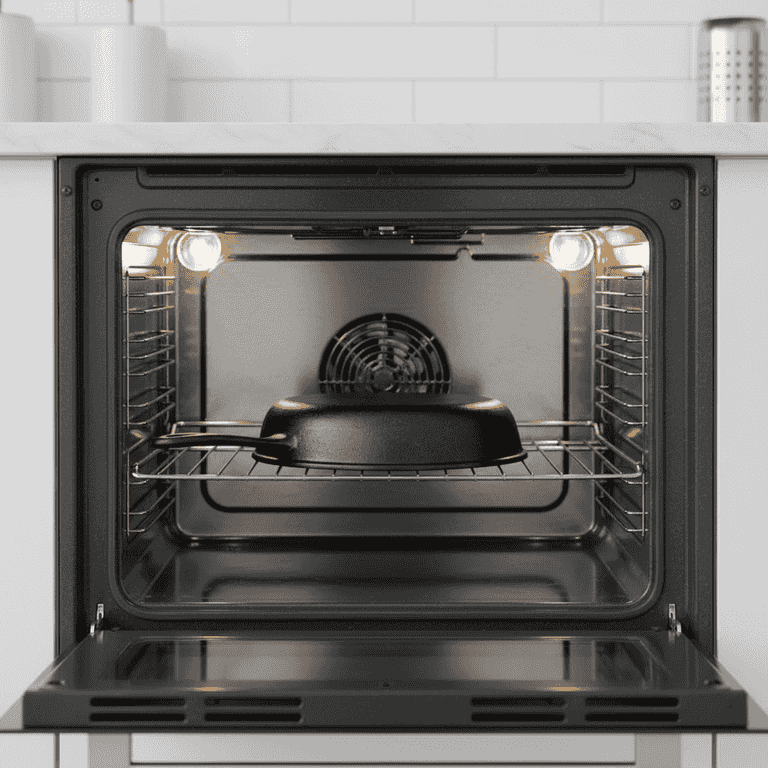
Bake the skillet
60 minutesPlace the skillet upside down in an oven preheated to 450°F (230°C) for one hour.
Baking upside down prevents excess oil from pooling at the bottom. This process, known as polymerization, turns the oil into a hard, non-stick plastic-like surface.
Ensure the kitchen is well-ventilated as the oil may produce some smoke during the baking process.
Place a sheet of aluminum foil on the rack below the pan to catch any potential drips.
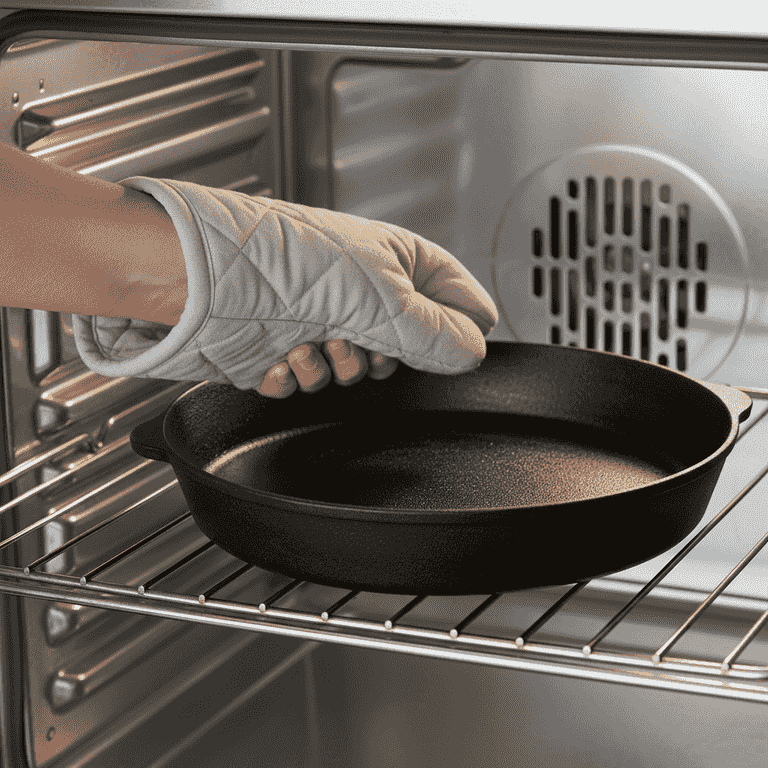
Cool and repeat
2 hoursTurn off the oven and let the skillet cool completely inside before removing it.
Repeat the oiling and baking process at least two or three times to build a durable, dark, and slick seasoning layer.
The pan will get darker and more non-stick with every cycle you perform.
Pro Tips
- ●Never put your cast iron skillet in the dishwasher.
- ●Always dry your pan on the stove after washing to prevent rust.
- ●The more you cook with fatty foods like bacon, the better the seasoning will become over time.
- ●If the seasoning feels tacky, you used too much oil; simply bake it for another hour to harden it.