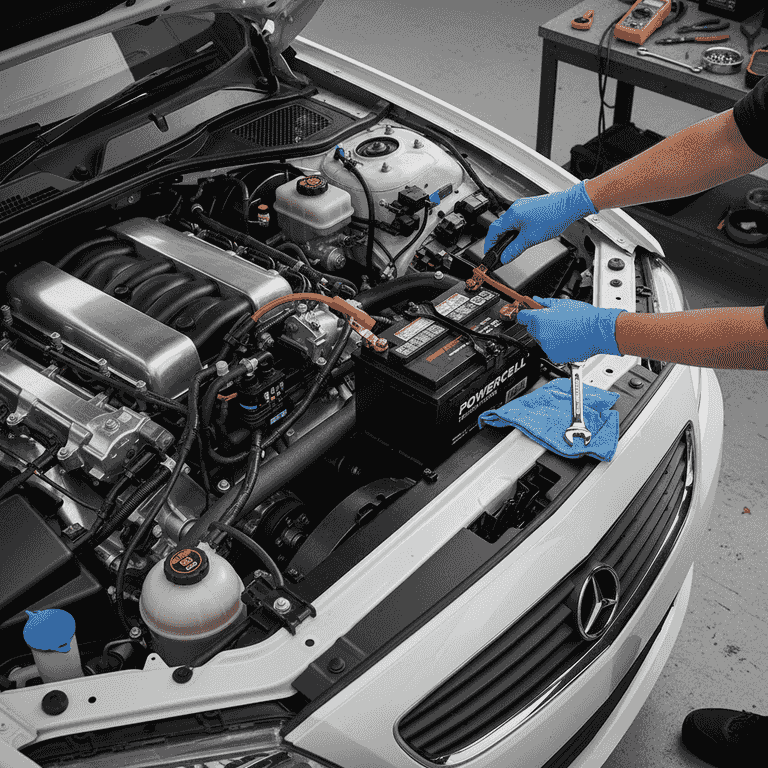
How to Replace a Car Battery
Replacing a car battery is a straightforward automotive maintenance task that can save you money and get you back on the road. Follow these steps to safely remove your old battery and install a fresh one.

Prepare the vehicle
2 minutesPark the car on a level surface, turn off the engine, and engage the parking brake.
Open the hood and locate the battery. Ensure the ignition is off and keys are removed to prevent any electrical shorts during the process.
Ensure the engine is cool before starting to avoid burns from hot engine components.
Consult your owner's manual for the specific battery location if it is not immediately visible under the hood.
Disconnect the negative terminal
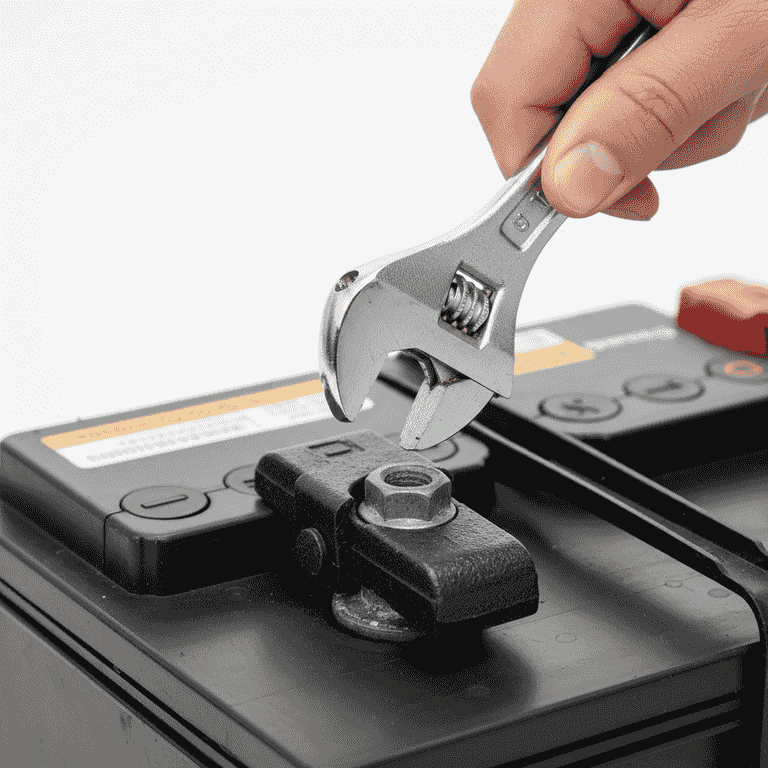
5 minutesUse your wrench to loosen the nut on the negative (-) black cable clamp.
The negative cable is usually marked with a minus sign or a black cover. Once loose, pull the cable off the terminal and set it aside so it cannot touch the terminal.
Do not let the wrench touch both the negative and positive terminals simultaneously.
Always disconnect the negative side first to prevent accidental shorting if your tool touches the car frame.
Disconnect the positive terminal
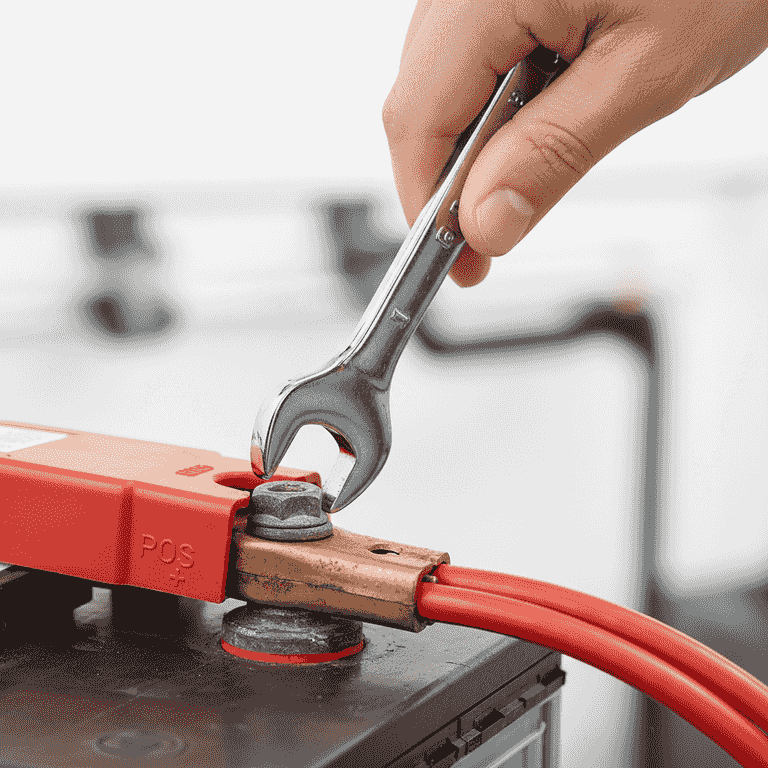
3 minutesLoosen the nut on the positive (+) red cable clamp and remove it from the terminal.
Once the negative cable is safely out of the way, repeat the process for the positive cable. Move the positive cable aside, ensuring it does not touch the negative terminal.
Be careful not to drop the wrench onto the battery terminals.
If the terminal is stuck due to corrosion, gently wiggle it back and forth while pulling upward.
Remove the hold-down bracket
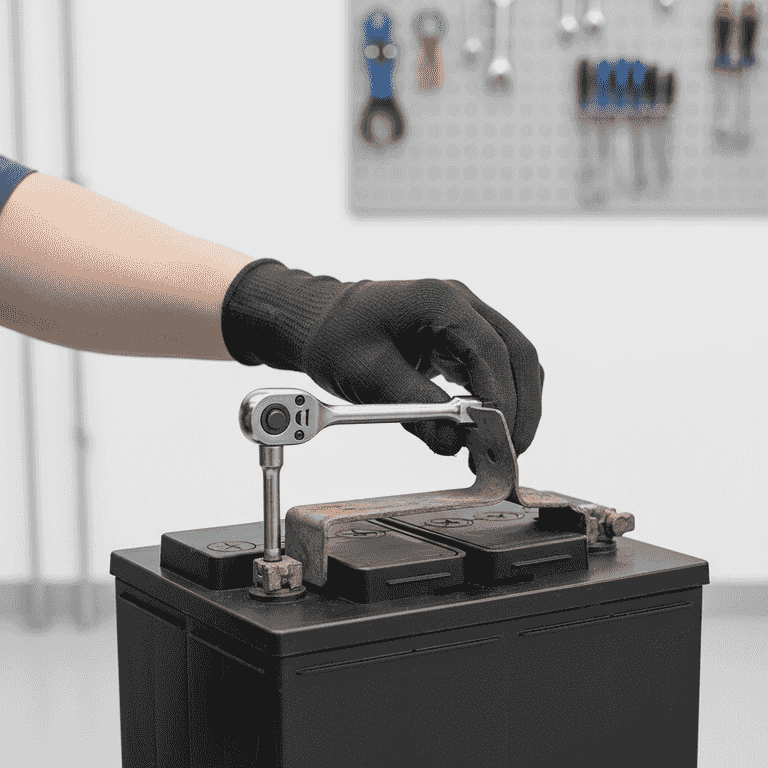
5 minutesUnscrew the bolt or nut securing the battery hold-down clamp or bracket.
Most batteries are secured by a metal bar or a plastic wedge at the base. Remove the hardware and set the bracket aside in a safe place.
Ensure the battery does not tip over when the bracket is removed.
Keep track of all bolts and nuts in a small tray to avoid losing them in the engine bay.
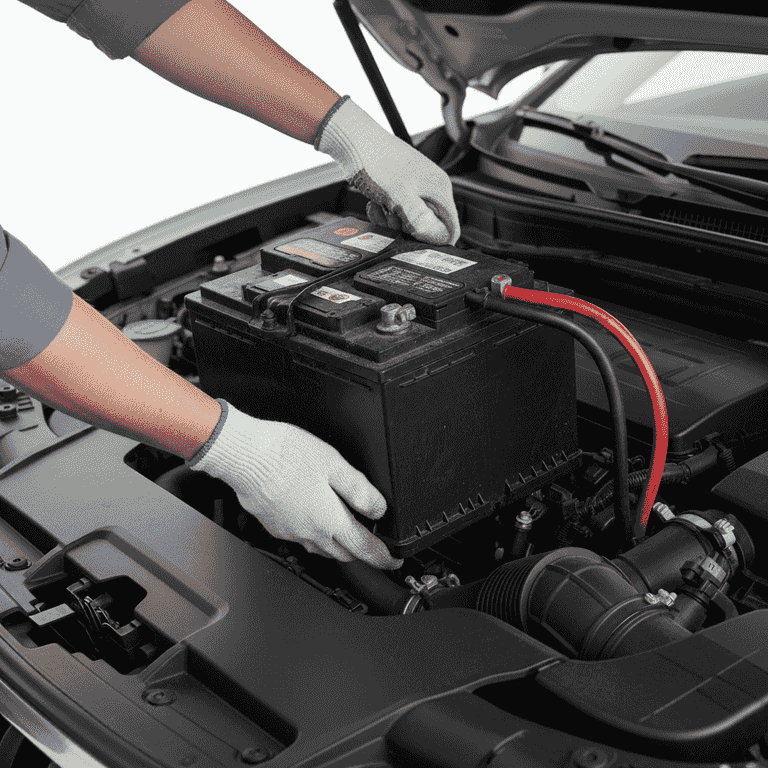
Remove the old battery
3 minutesCarefully lift the old battery out of the engine bay.
Car batteries are heavy; use a firm grip to lift it straight up and out. Place the old battery on a stable surface away from the vehicle.
Keep the battery upright at all times to prevent acid leakage.
If the battery is too heavy, use a battery carrier strap for better leverage.
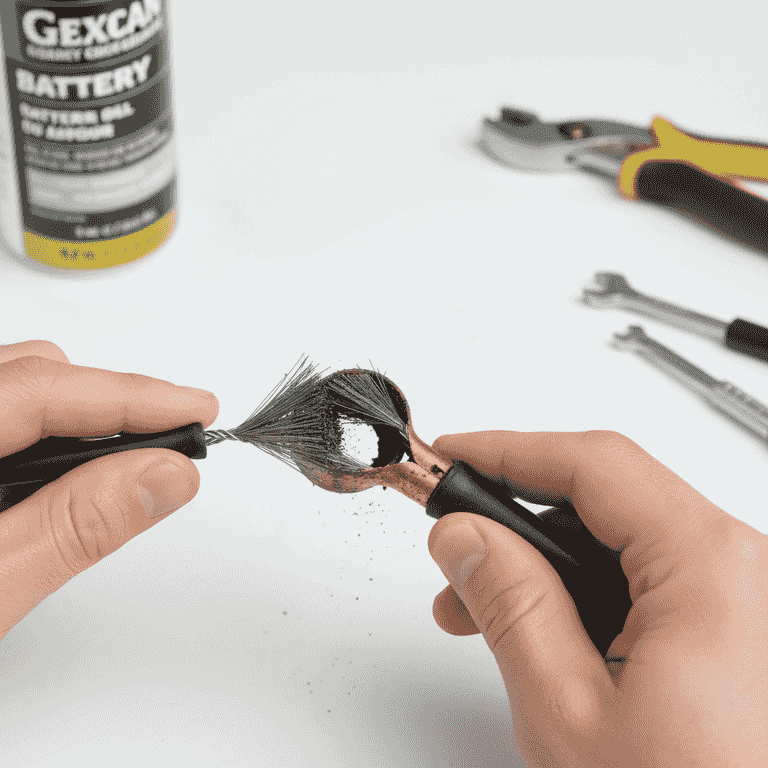
Clean the terminal cables
5 minutesUse a wire brush to scrub away any white or blue corrosion from the cable clamps.
Corrosion prevents a good electrical connection. Ensure the inside of the clamps are clean and shiny before installing the new battery.
Wear gloves while cleaning, as battery corrosion is caustic.
A mixture of baking soda and water can help neutralize and remove stubborn corrosion.
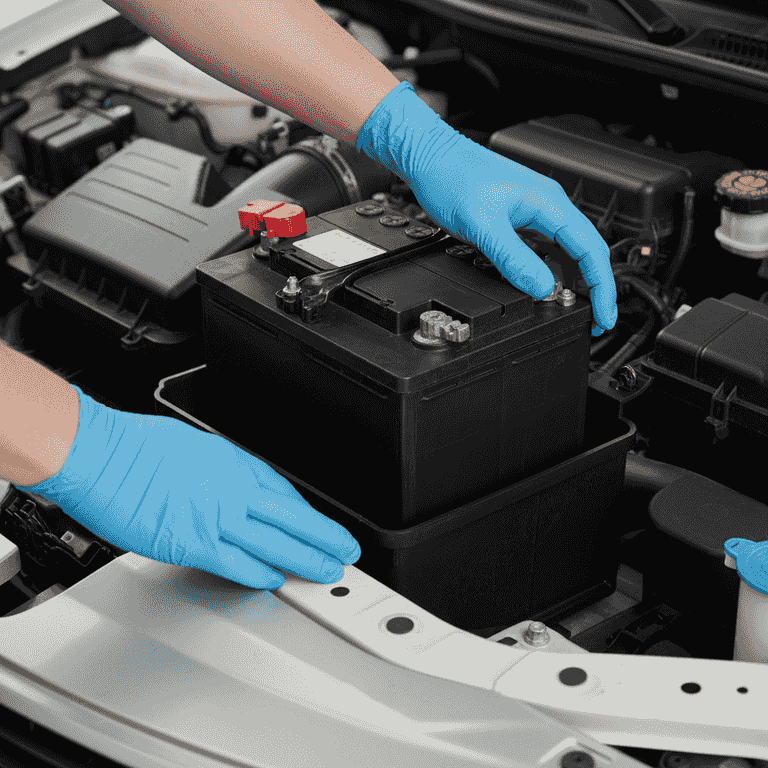
Install the new battery
5 minutesPlace the new battery into the tray, ensuring the positive and negative posts are correctly oriented.
Check that the battery is seated firmly in the tray. Reinstall the hold-down bracket to secure the battery in place.
Do not overtighten the hold-down bracket, as it may crack the battery casing.
Double-check the positive and negative labels on the new battery to match the vehicle's cable layout.
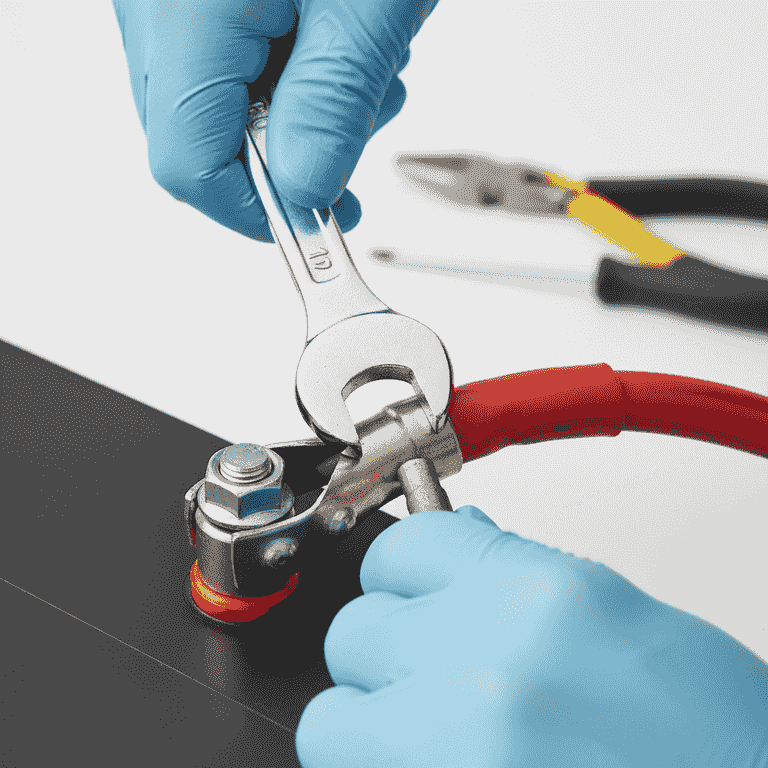
Reconnect the cables
2 minutesConnect the positive (+) cable first, then the negative (-) cable.
Tighten the nuts on both clamps until they are snug and cannot be moved by hand. Reinstall any protective terminal covers if applicable.
Always connect the positive cable before the negative cable to complete the circuit safely.
Applying a thin layer of terminal grease can help prevent future corrosion.
Pro Tips
- ●Always recycle your old battery at an auto parts store; many offer a core charge refund.
- ●Check your battery's manufacture date to ensure you are buying a fresh unit.
- ●If your car has advanced electronics, consider using a memory saver device to keep radio and seat settings.
- ●Take a photo of the original battery setup before disconnecting anything for reference.