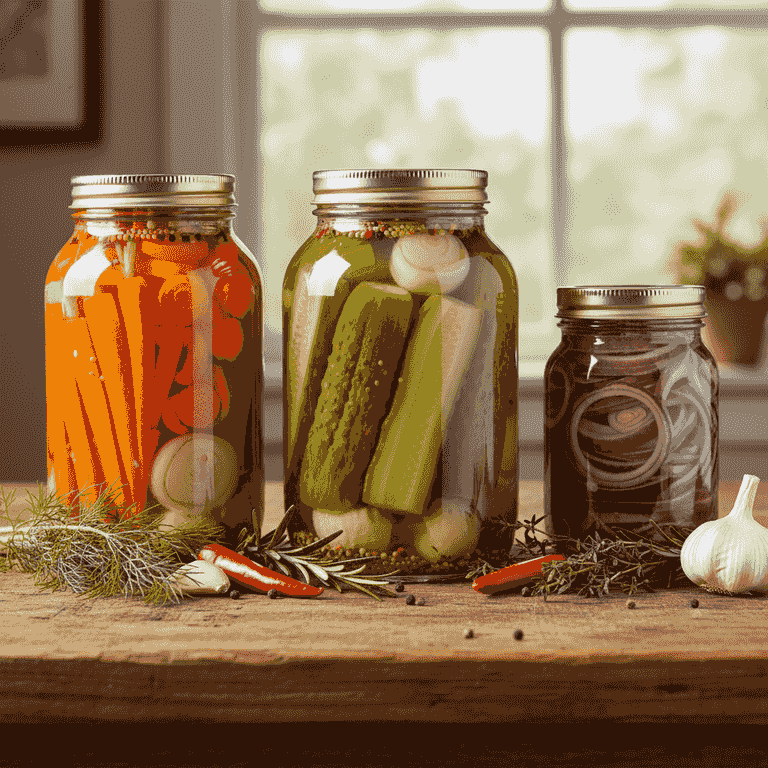
How to Pickle Vegetables
Learn the art of quick-pickling fresh vegetables to preserve their crunch and add a tangy, acidic punch to any meal. This simple refrigerator method requires no complex canning equipment and is ready to enjoy in just a few hours.
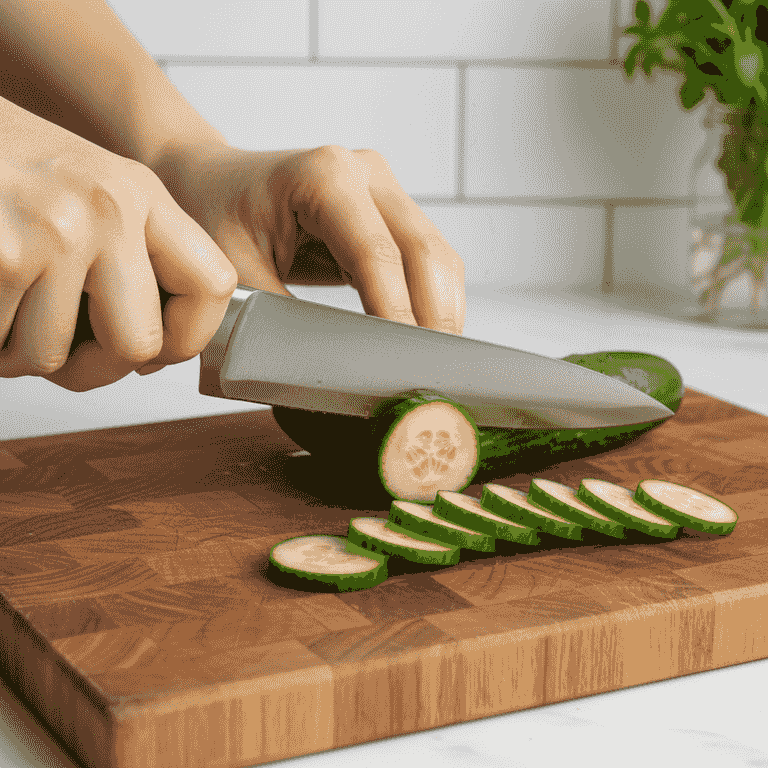
Prepare the vegetables
10 minutesWash your vegetables thoroughly and slice them into uniform spears, coins, or chunks.
Uniformity ensures that all pieces pickle at the same rate. Remove any bruised or wilted parts to ensure the best flavor.
Use a mandoline slicer if you prefer very thin, consistent vegetable rounds.
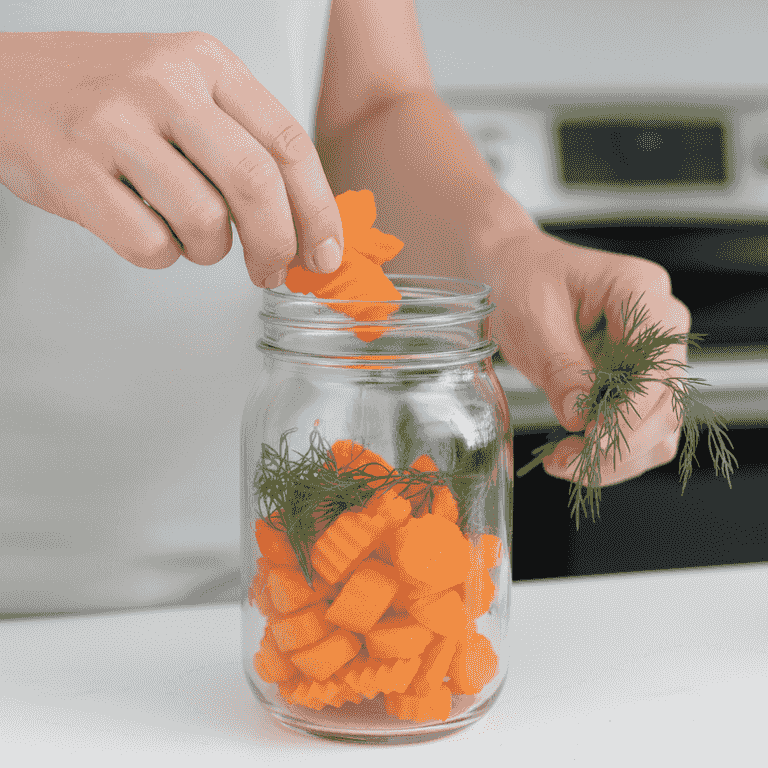
Pack the jar
5 minutesTightly pack the sliced vegetables into a clean glass mason jar.
Leave about half an inch of headspace at the top of the jar. You can add aromatics like garlic cloves, dill sprigs, or peppercorns at the bottom for extra flavor.
Pack them as tightly as possible without crushing the vegetables to maximize jar capacity.
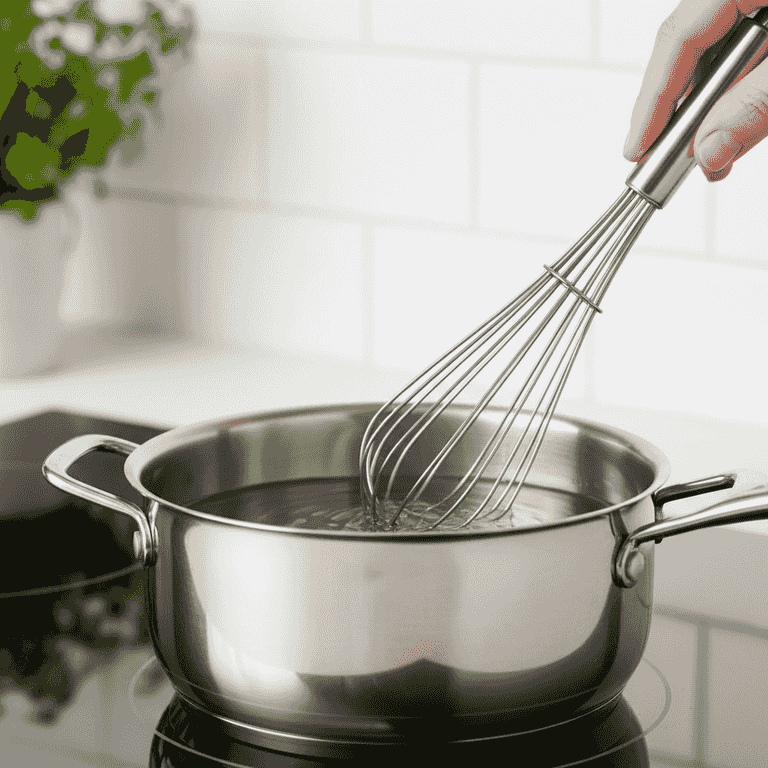
Create the brine
10 minutesCombine equal parts water and vinegar, along with salt and sugar, in a small saucepan.
The standard ratio is 1:1, but you can adjust based on your preference for tartness. Heat the mixture over medium heat until the salt and sugar are completely dissolved.
Do not let the vinegar mixture come to a violent boil, as it can create strong, irritating fumes.
Use white vinegar for a sharp, neutral taste, or apple cider vinegar for a fruitier profile.
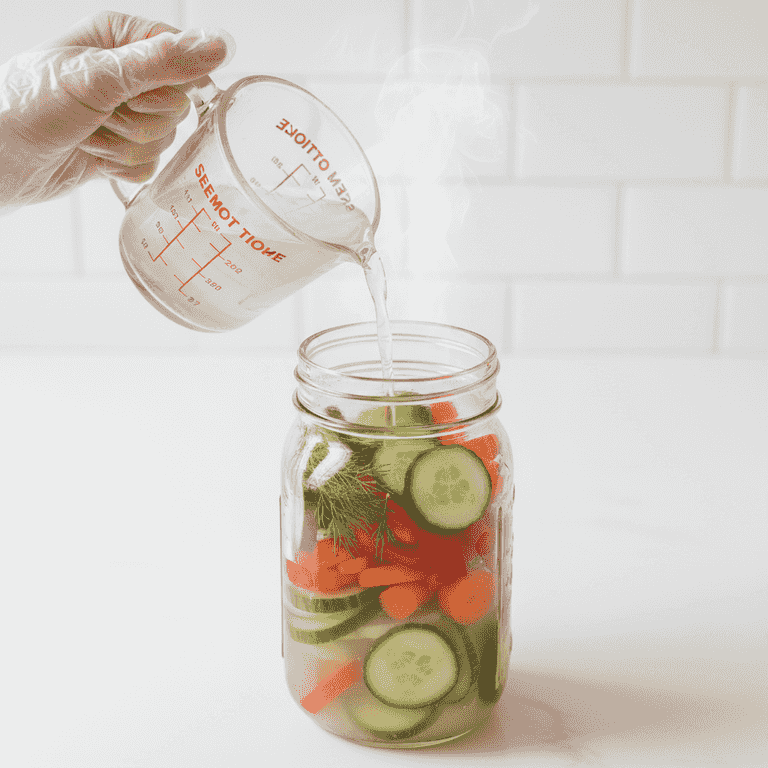
Pour the brine
5 minutesCarefully pour the hot brine into the jar until the vegetables are completely submerged.
Ensure there are no large air bubbles trapped between the vegetables. You can tap the jar gently on the counter to release any air pockets.
The glass jar may be hot; handle it with a kitchen towel or oven mitt if necessary.
Use a funnel to prevent spilling the hot liquid onto the counter.
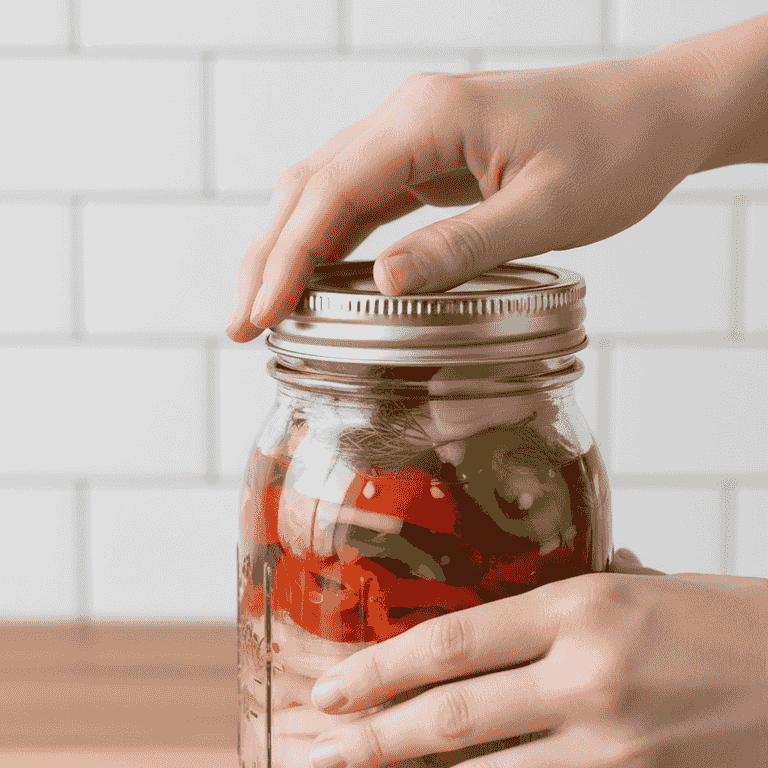
Seal and cool
15 minutesSecure the lid tightly on the jar and allow it to cool to room temperature on the counter.
Once cooled, the jar can be moved to the refrigerator. The pickling process continues as the jar chills.
Label the jar with the date so you know how long they have been pickling.
Pro Tips
- ●Wait at least 24 hours before eating for the best flavor infusion.
- ●Experiment with spices like mustard seeds, coriander, or red pepper flakes.
- ●Quick pickles will stay fresh and crunchy in the refrigerator for up to three weeks.
- ●Always use non-reactive cookware like stainless steel or glass when heating vinegar.