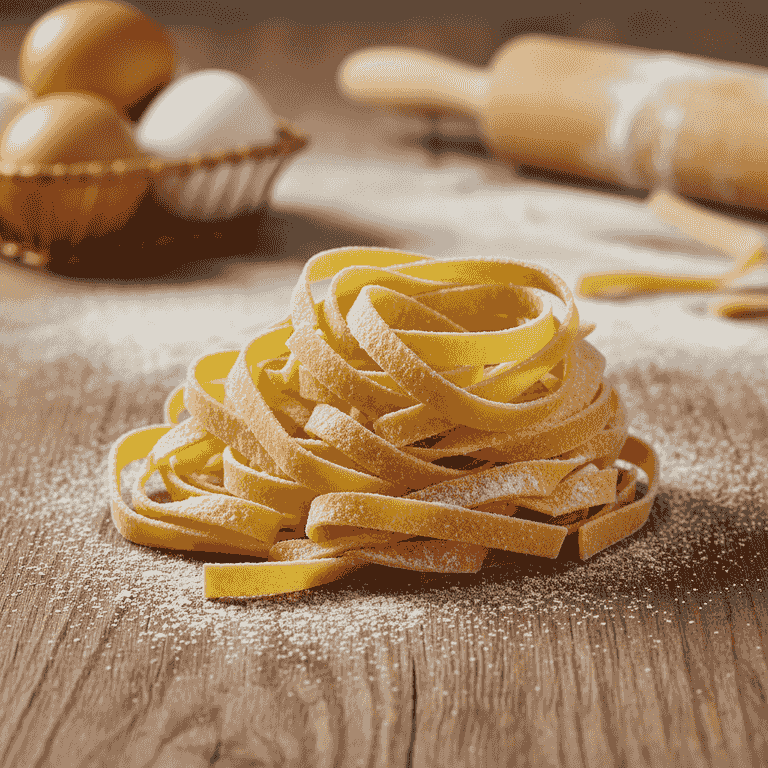
How to Make Homemade Pasta
Learn the art of crafting fresh, authentic pasta from scratch using only flour and eggs. This guide walks you through the traditional well method to create silky, delicious noodles right in your own kitchen.
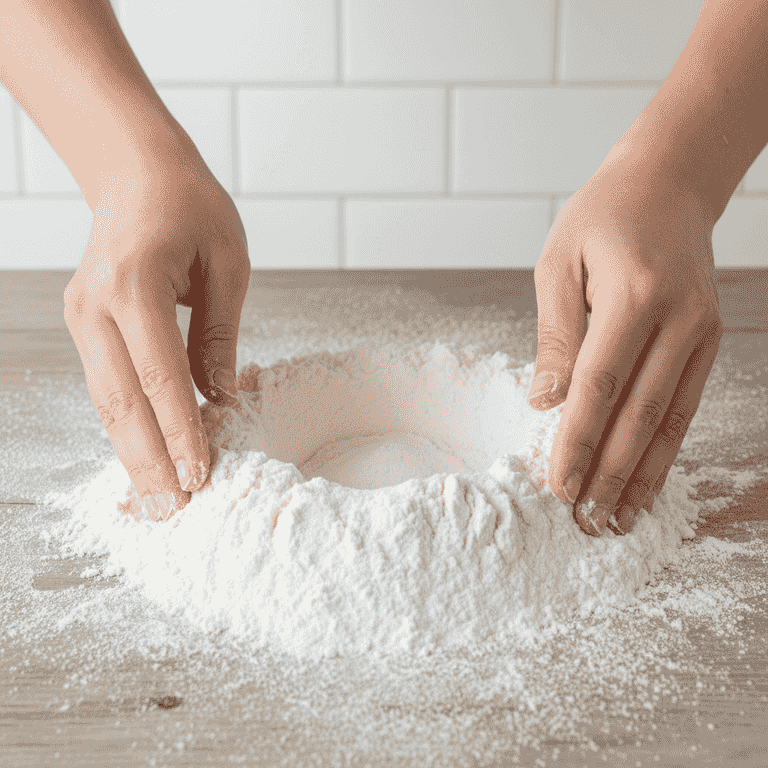
Create the flour mound
2 minutesPour your flour onto a clean, flat work surface and create a deep, wide well in the center to hold the eggs.
The well acts as a containment vessel for the liquid ingredients. Ensure the walls of the flour mound are thick enough to prevent the eggs from leaking out onto the counter.
Use '00' flour for the finest, most authentic pasta texture.
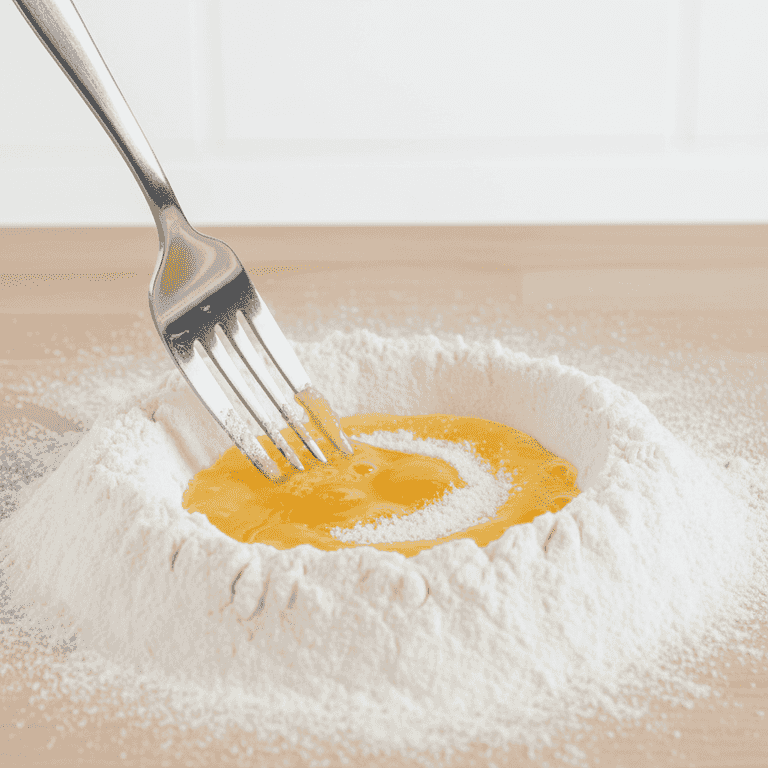
Incorporate the eggs
5 minutesCrack eggs into the well and use a fork to slowly whisk them, gradually pulling in flour from the inner walls.
Take your time with this process to ensure a smooth transition from liquid to dough. Continue whisking until the mixture becomes too thick for the fork.
Use room temperature eggs for better integration into the flour.
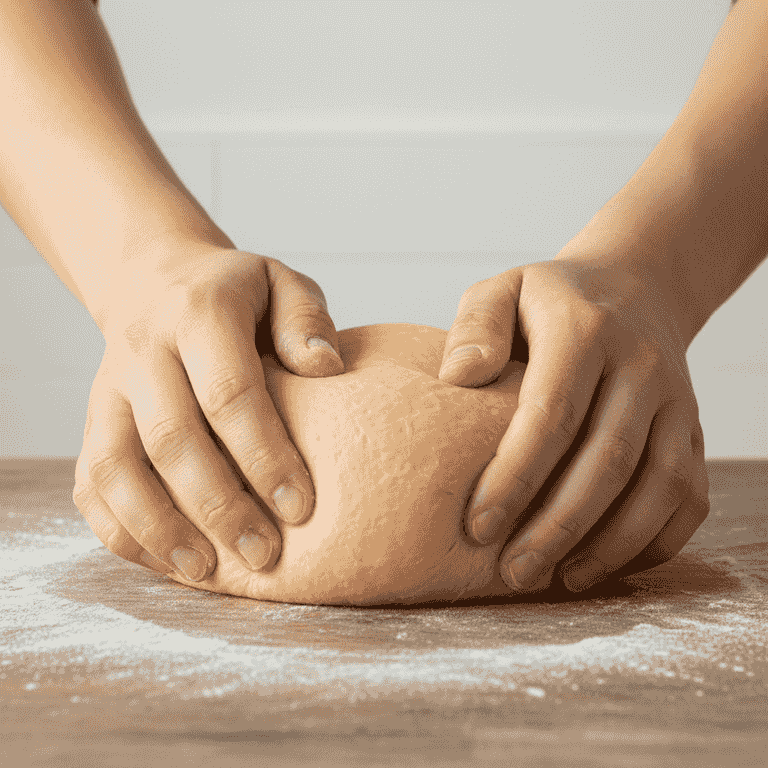
Knead the dough
10 minutesUse your hands to fold the remaining flour into the egg mixture and knead until a smooth, elastic ball forms.
Kneading develops the gluten necessary for the pasta's structure. Push the dough away from you with the heel of your hand, fold it back, and rotate it slightly, repeating for 10 minutes.
If the dough feels too dry, add water half a teaspoon at a time; if too sticky, add a dusting of flour.
Rest the dough
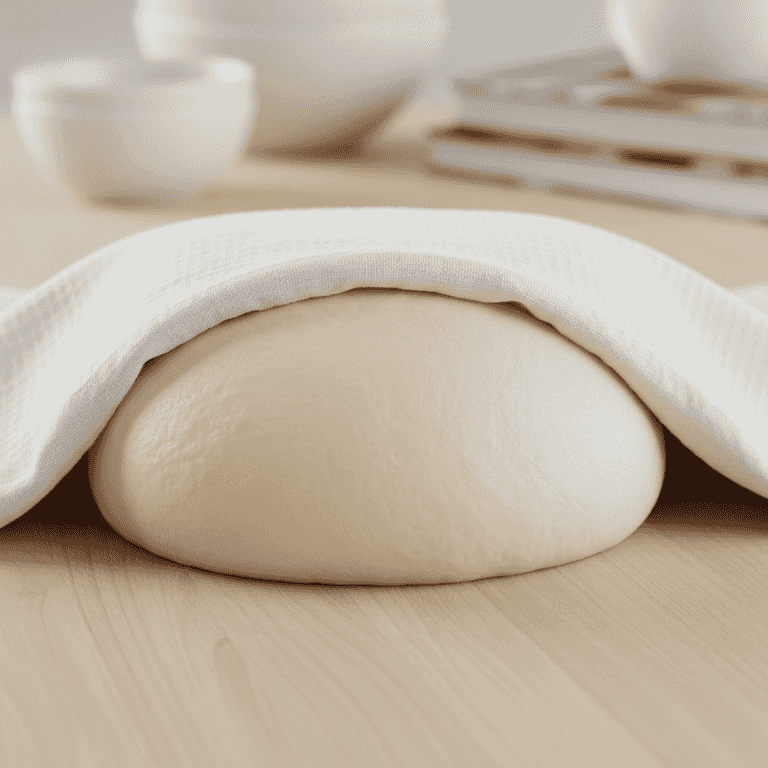
30 minutesWrap the dough ball in plastic wrap or cover it with a kitchen towel and let it rest at room temperature.
Resting allows the gluten to relax, making the dough much easier to roll out later without it snapping back. Do not skip this step.
Resting for 30 minutes is the minimum; an hour is better.
Roll the dough
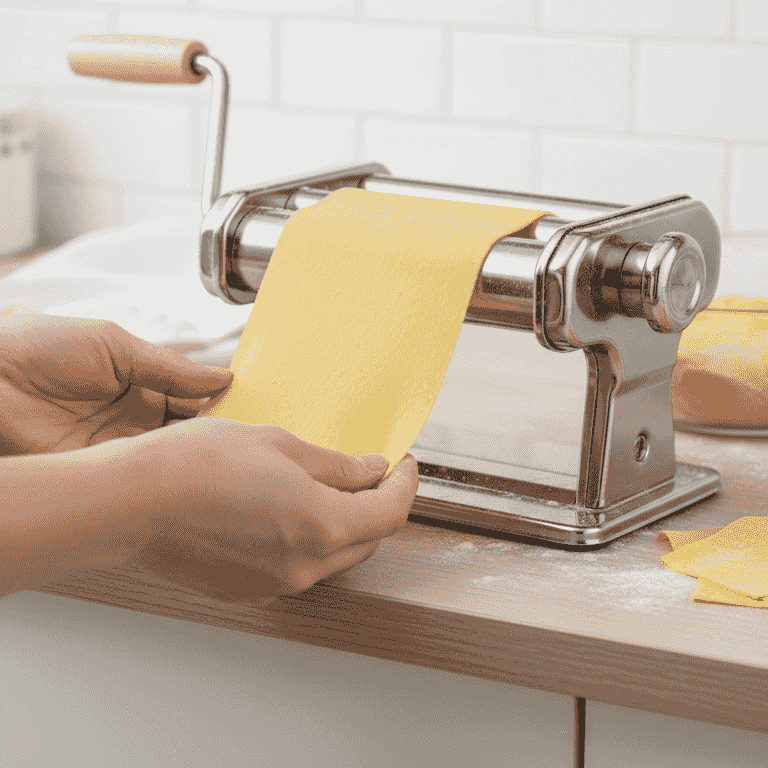
10 minutesDivide the dough into smaller sections and pass them through a pasta machine, starting at the widest setting.
Gradually decrease the setting on the machine with each pass until you achieve the desired thinness. The sheet should be translucent enough to see your hand behind it.
Ensure the pasta machine is securely clamped to the counter to prevent it from sliding.
Dust the dough lightly with flour before each pass to prevent sticking.
Cut the pasta
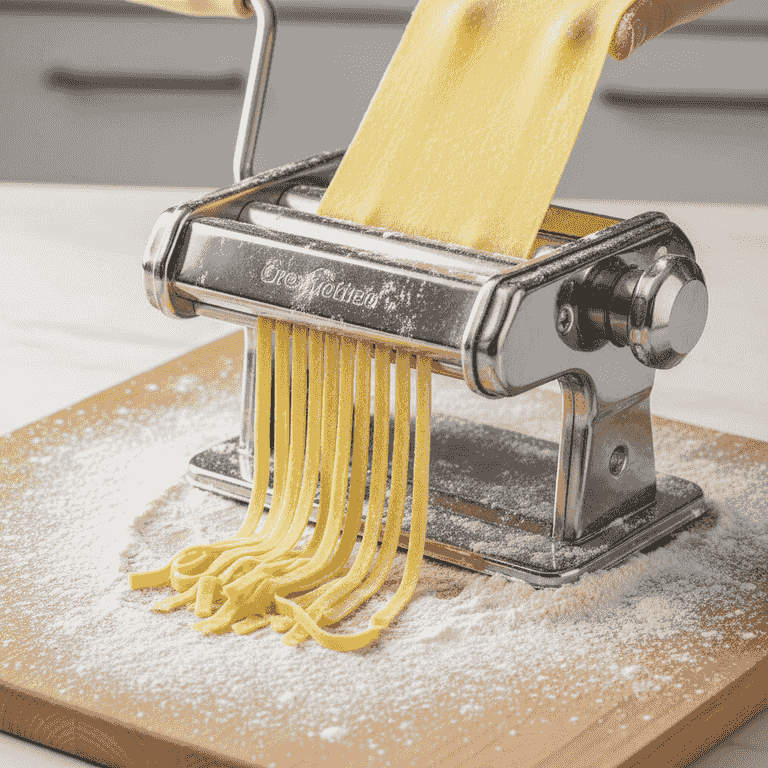
5 minutesRun the thin pasta sheets through the cutting attachment of the machine or fold and cut by hand with a knife.
If cutting by hand, dust the sheets generously with flour, roll them into a loose cylinder, and slice into your preferred width. Unfurl the noodles immediately after cutting.
Be careful when feeding the sheets into the cutting attachment; keep fingers away from the rollers.
Hang the cut pasta on a drying rack or drape it over a clean broomstick to prevent sticking.
Pro Tips
- ●Always use a large pot with plenty of salted boiling water to cook fresh pasta.
- ●Fresh pasta cooks much faster than dried pasta, usually in 2-3 minutes.
- ●If you have leftover dough, you can freeze it for up to a month.
- ●Don't throw away the flour scraps; they can be used to dust your work surface.
- ●For colored pasta, add a tablespoon of spinach puree or tomato paste to the egg mixture.