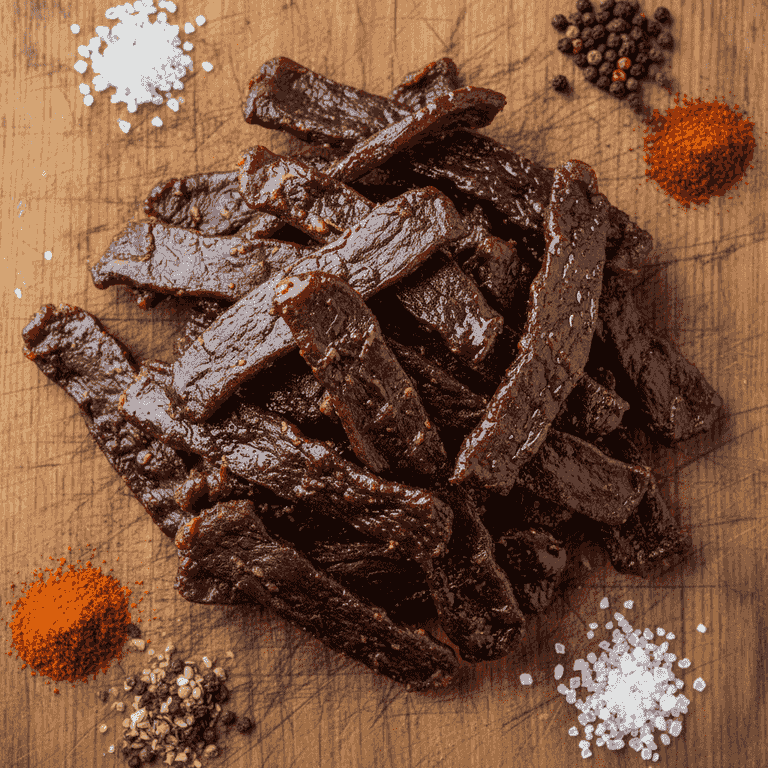
How to Make Homemade Beef Jerky
Learn the art of crafting delicious, shelf-stable beef jerky at home using simple pantry ingredients and a dehydrator. This guide walks you through selecting the right cuts, marinating for flavor, and dehydrating to perfection.
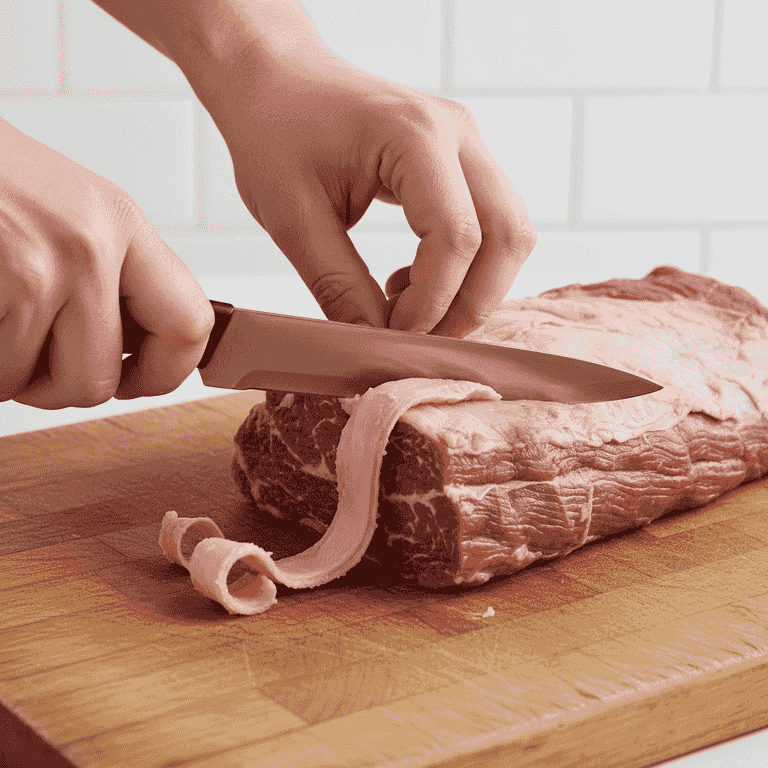
Select and trim the meat
15 minutesChoose a lean cut of beef like eye of round, sirloin, or flank steak and trim away all visible fat.
Fat does not dehydrate well and can cause the jerky to go rancid quickly. Removing all external fat ensures your jerky has a longer shelf life.
Do not skip trimming the fat, as it will significantly reduce the shelf stability of your finished jerky.
Place the meat in the freezer for 60 minutes before slicing to make it firm and easier to cut.
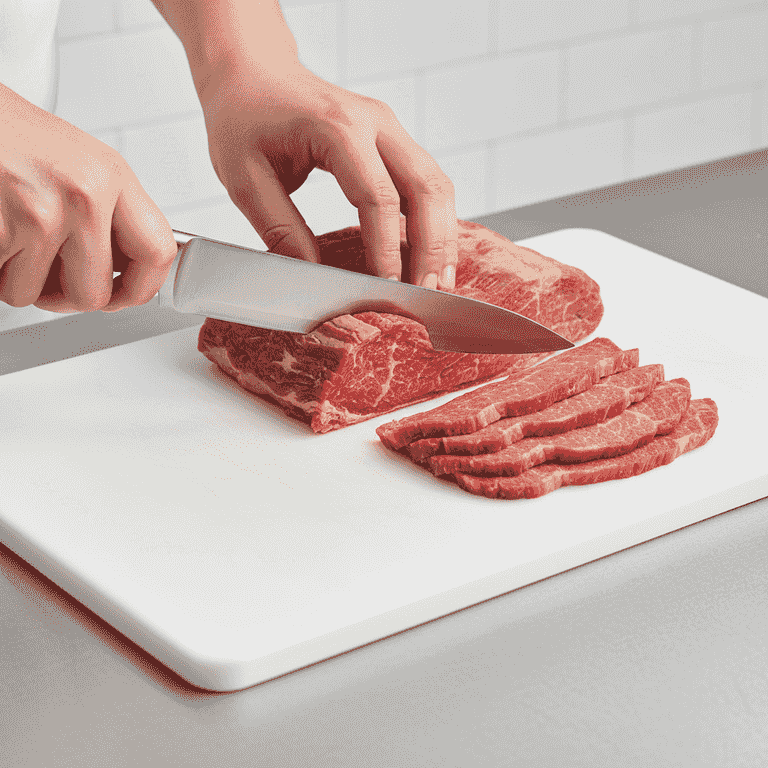
Slice the beef
20 minutesSlice the beef into thin, uniform strips approximately 1/8 to 1/4 inch thick.
Slicing against the grain results in a tender chew, while slicing with the grain produces a tougher, chewier jerky. Aim for consistency so all strips dry at the same rate.
Use a steady hand and a very sharp knife to maintain even thickness throughout the strips.
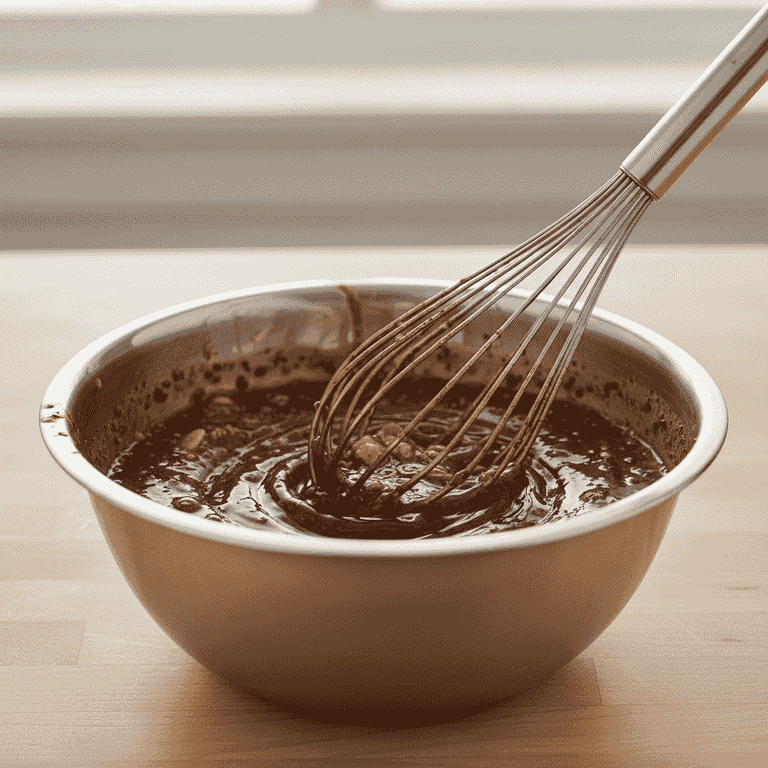
Prepare the marinade
5 minutesWhisk together your soy sauce, Worcestershire sauce, liquid smoke, and spices in a mixing bowl.
The marinade acts as both a flavoring agent and a curing assistant. Ensure all salt and sugar-based ingredients are fully dissolved.
Add a pinch of red pepper flakes if you prefer a spicy kick to your jerky.
Marinate the meat
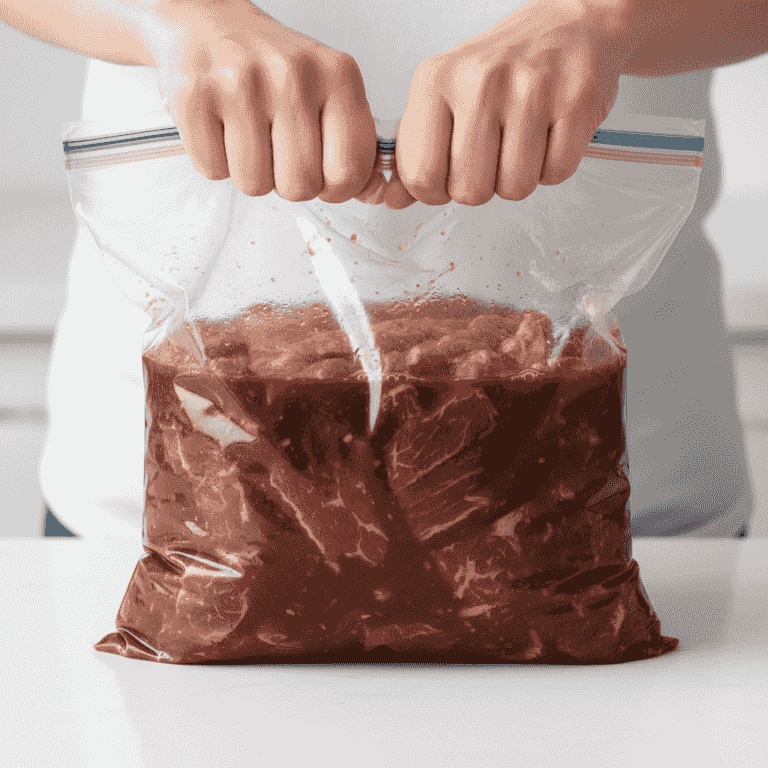
8-24 hoursPlace the beef strips into a Ziploc bag, pour the marinade over them, and seal the bag tightly.
Massage the bag to ensure every strip is thoroughly coated. Refrigerate for at least 8 hours, or up to 24 hours for a deeper flavor profile.
Always marinate in the refrigerator to keep the meat at a safe temperature.
Squeeze as much air out of the bag as possible before sealing to ensure the meat stays fully submerged.
Arrange on dehydrator trays
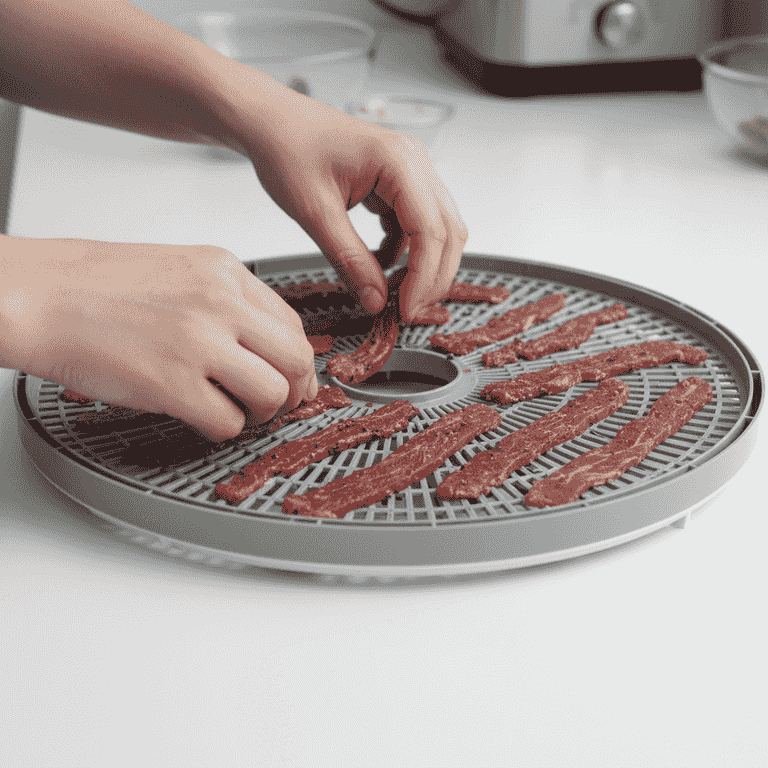
10 minutesRemove strips from the marinade and pat them dry with paper towels, then lay them flat on dehydrator trays.
Ensure the strips are not overlapping, as this allows air to circulate freely around each piece. Proper airflow is critical for even drying.
Drying the excess marinade off the surface helps the meat start dehydrating immediately.
Dehydrate the jerky
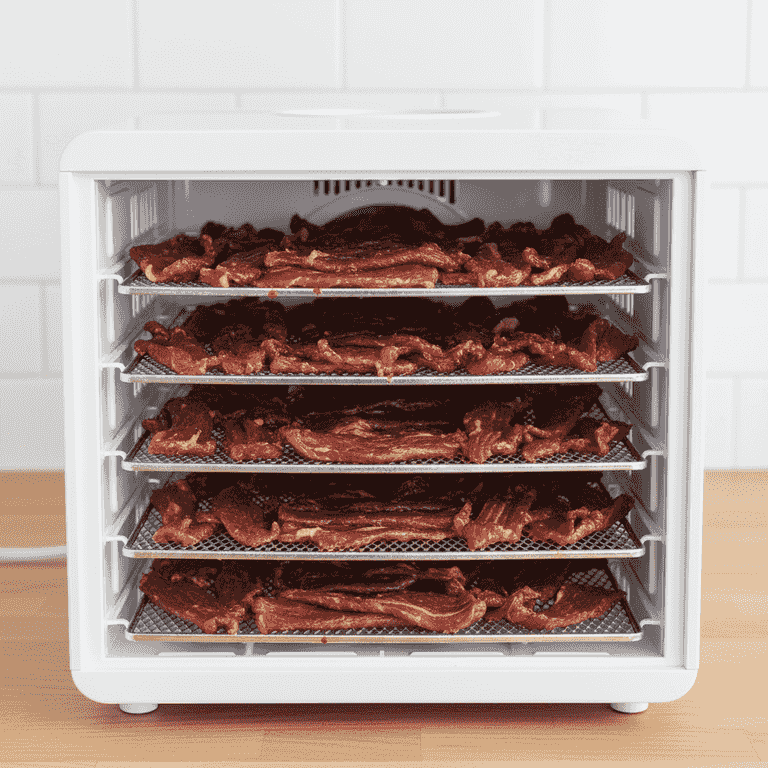
4-8 hoursSet the dehydrator to 160°F and process the meat for 4 to 8 hours.
Check the jerky periodically after 4 hours. It is finished when it bends and cracks slightly without breaking in half.
Do not consume if the meat is still soft, tacky, or moist in the center.
Rotate the trays halfway through the drying time if your dehydrator does not have a fan at the back.
Pro Tips
- ●Always use a meat thermometer to ensure your dehydrator maintains at least 160°F for food safety.
- ●For easier cleanup, line the bottom of your dehydrator with parchment paper to catch drips.
- ●Let the finished jerky cool completely before storing, as residual heat can create condensation in the bag.
- ●If you want to store jerky for long periods, vacuum seal the bags to remove all oxygen.
- ●Experiment with different marinades, such as teriyaki, honey-garlic, or black pepper.