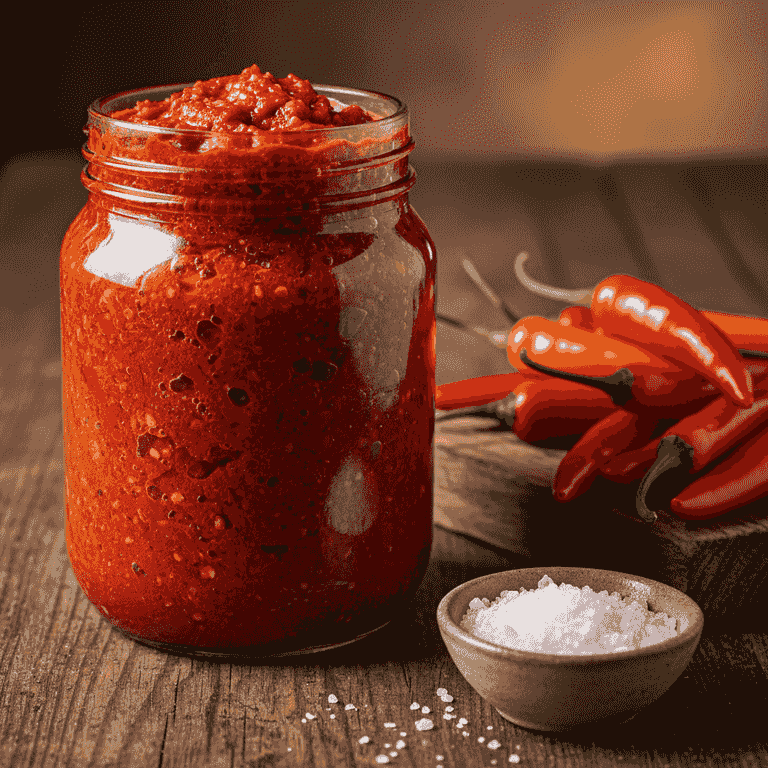
How to Make Fermented Hot Sauce
Transform fresh chili peppers into a complex, tangy, and probiotic-rich hot sauce using the art of lacto-fermentation. This guide walks you through the simple process of creating a brine-based mash that develops deep flavors over time.
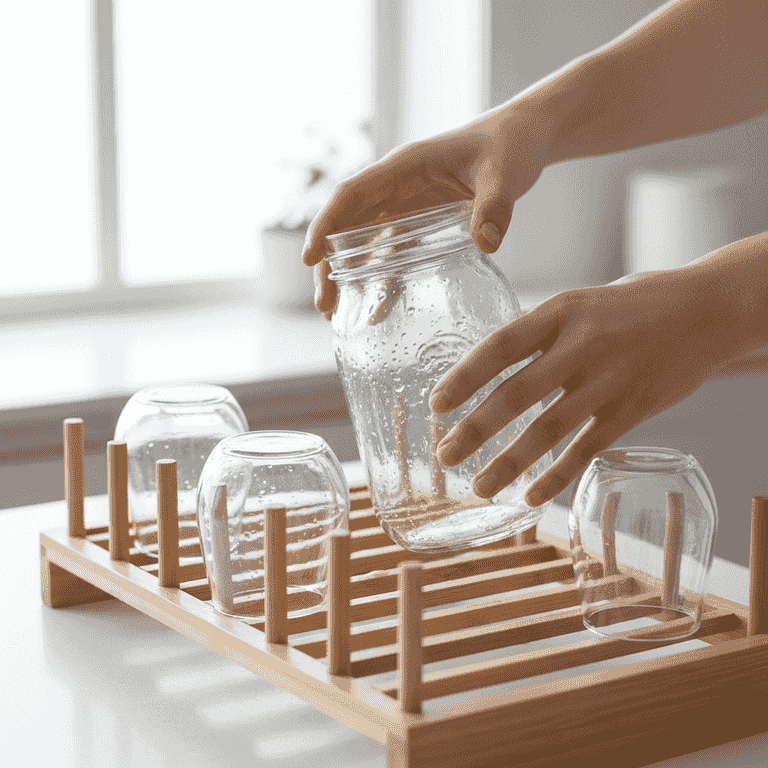
Sanitize your equipment
10 minutesWash your jar, lid, and weight in hot, soapy water and rinse thoroughly.
Sanitation is critical in fermentation to ensure that beneficial lactobacillus bacteria thrive without competition from unwanted pathogens.
Do not use bleach or harsh chemicals that could leave residues in your fermentation jar.
Boiling the glass jar for a few minutes is the most effective way to ensure it is sterile.
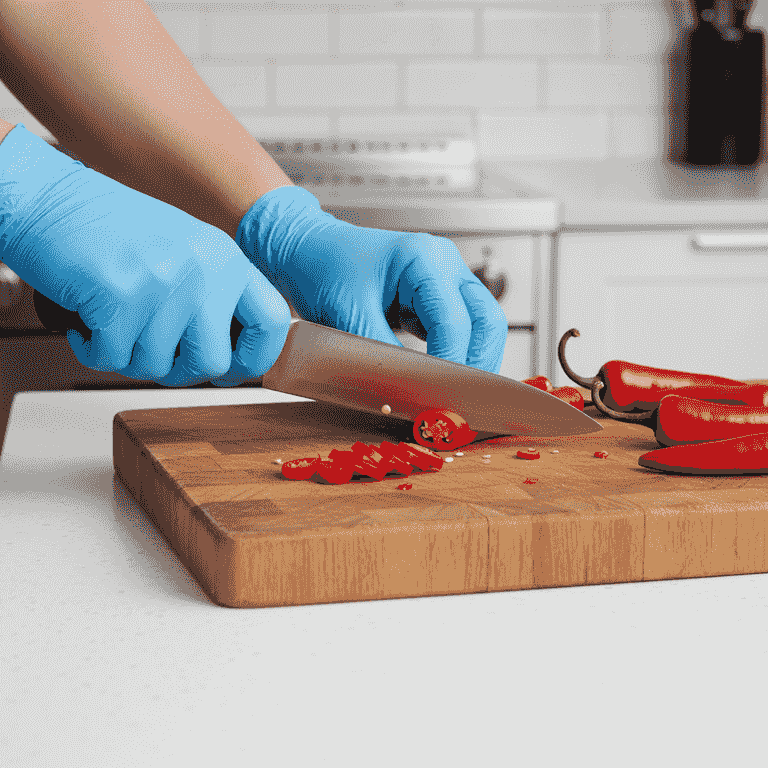
Prepare the peppers
15 minutesWear gloves and remove the stems from your chili peppers, then chop them into rough chunks.
Removing stems prevents woody texture in the final sauce. You can leave seeds in for more heat or remove them for a milder result.
Never touch your eyes or face while handling peppers; the oils can cause intense burning.
Keep the windows open or a fan running to dissipate the spicy fumes while chopping.
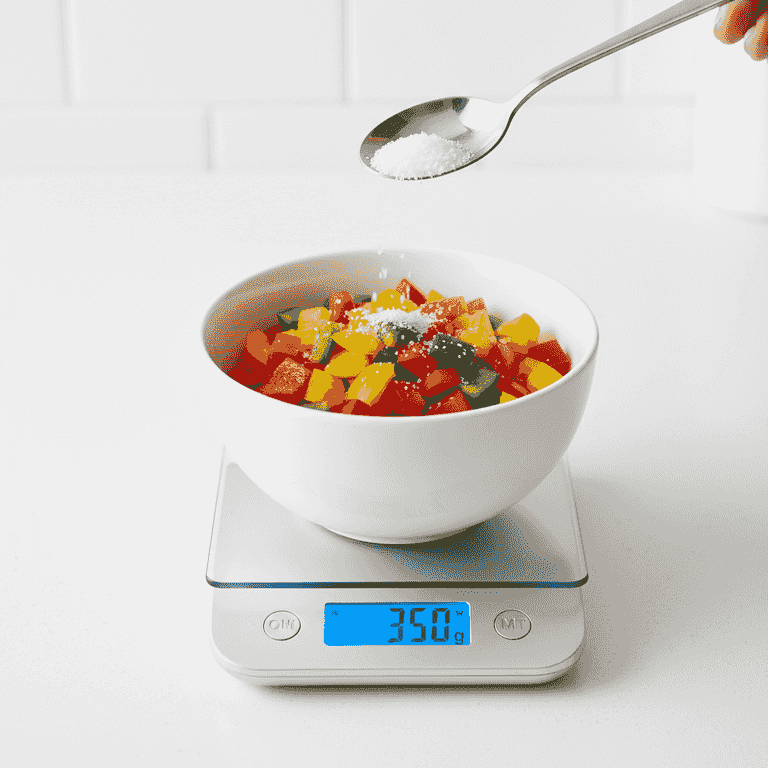
Calculate and add salt
5 minutesWeigh your peppers and aromatics, then add non-iodized sea salt equal to 3% of the total weight.
A 3% salt concentration is the 'sweet spot' for safe fermentation, inhibiting spoilage while allowing good bacteria to grow.
Use a kitchen scale for precision; measuring by volume is often inaccurate for salt.
Pulse into a mash
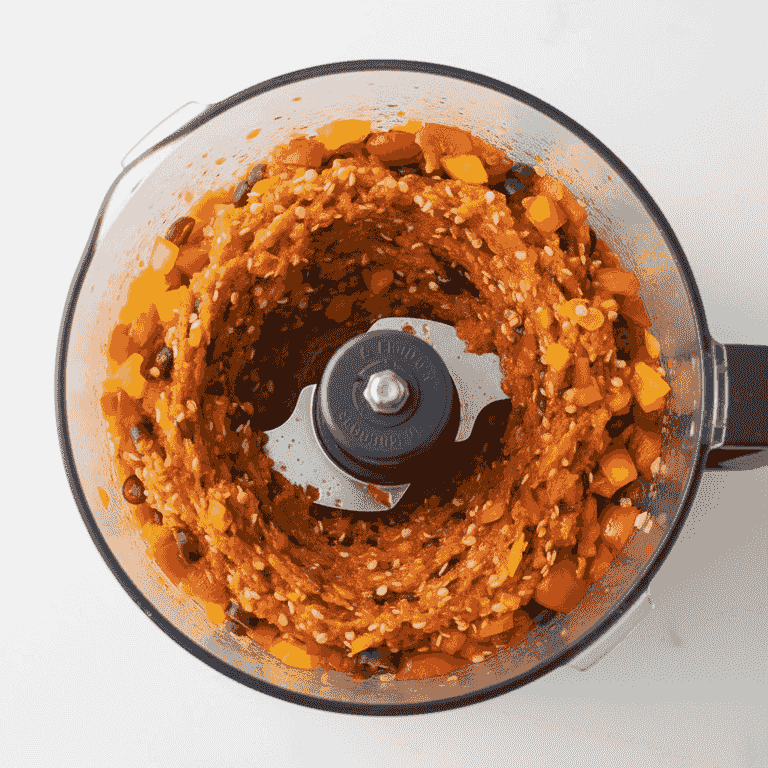
5 minutesPlace the salted peppers and aromatics into a food processor and pulse until you reach a coarse, uniform consistency.
Do not over-blend into a liquid puree; a coarse mash allows for better brine distribution and texture control.
Add a few cloves of garlic or onion at this stage for extra depth of flavor.
Pack the jar
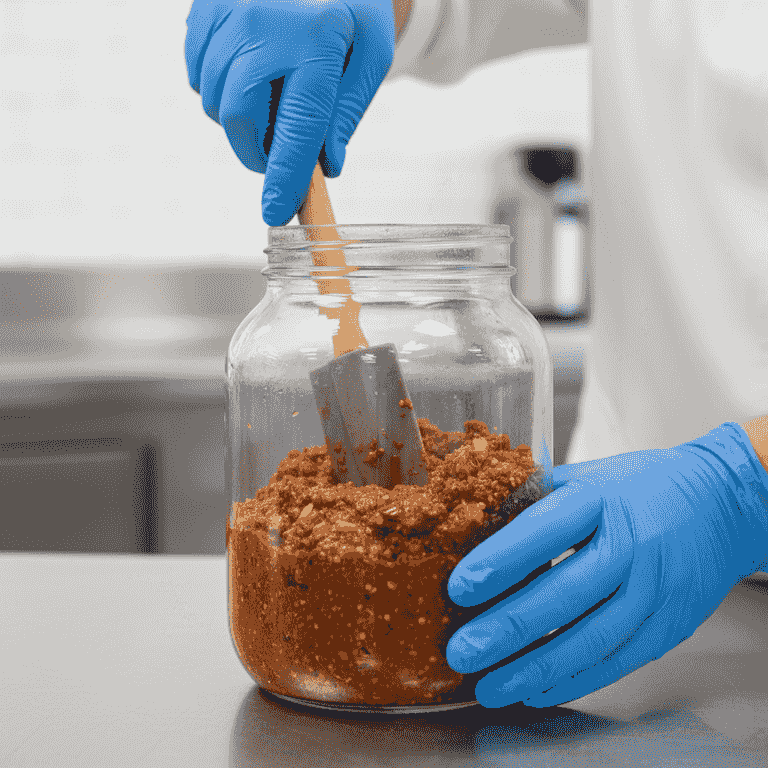
5 minutesTransfer the mash into your sanitized jar, pressing down firmly to remove large air pockets.
Packing the mash tightly is essential to create an anaerobic environment, which is necessary for fermentation.
If the mash is not packed firmly, air pockets can allow mold to form.
Leave at least two inches of headspace at the top of the jar to prevent overflow.
Submerge and ferment
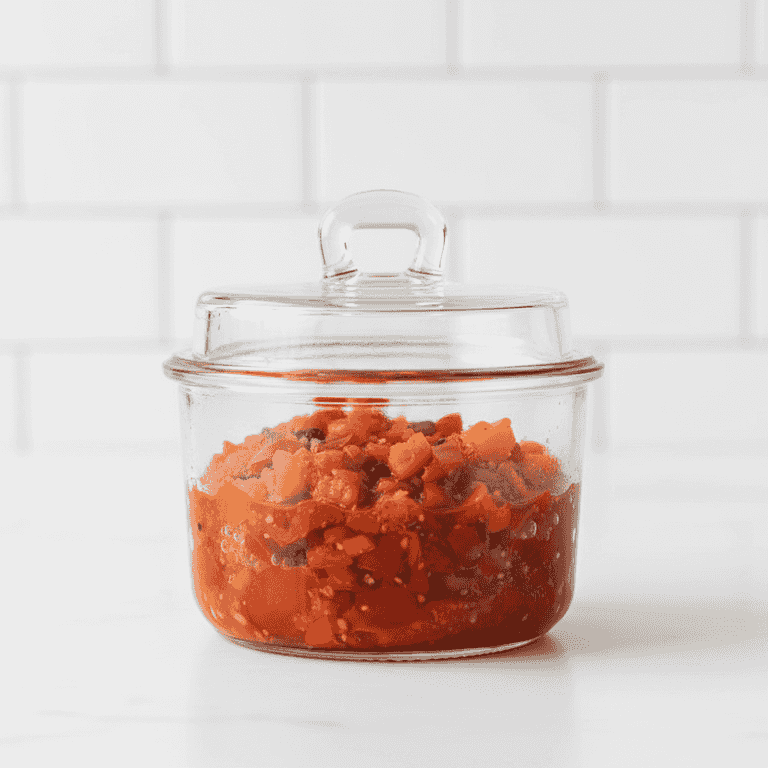
5 minutesPlace a glass fermentation weight on top of the mash and seal the lid.
The weight ensures all organic matter remains submerged below the brine, which prevents mold and oxidation.
Burp the jar daily for the first week to release carbon dioxide gas build-up.
Store the jar in a cool, dark place out of direct sunlight.
Pro Tips
- ●Use non-iodized sea salt, as iodine can inhibit the growth of beneficial bacteria.
- ●Ferment for at least 2 weeks for a mild flavor, or up to 4 weeks for a complex, sour profile.
- ●If the sauce is too thick after fermenting, blend it with a splash of white vinegar or brine to reach your desired consistency.
- ●Strain the solids through a fine mesh sieve if you prefer a 'bottled' style hot sauce texture.