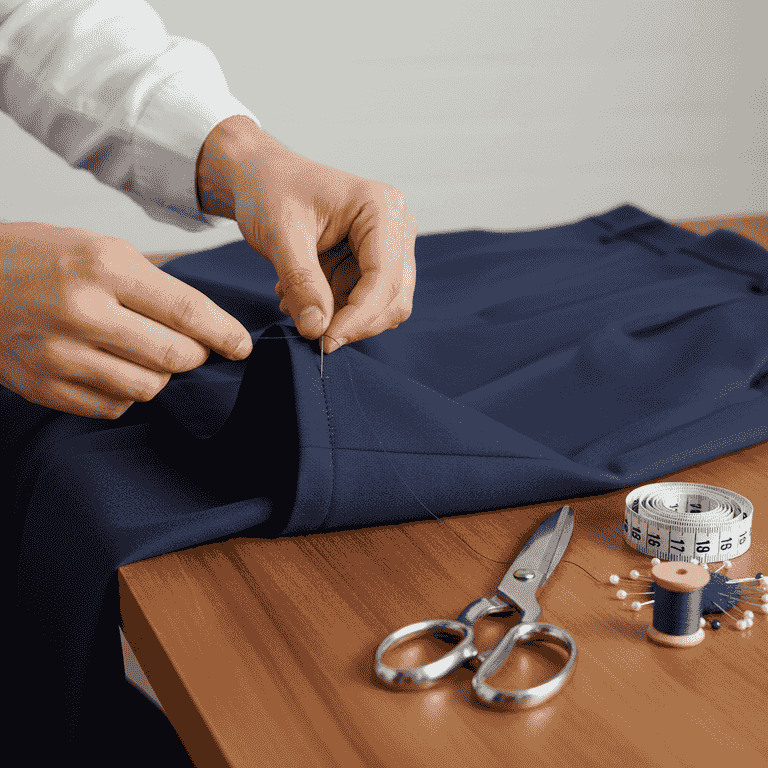
How to Hem Pants by Hand
Learn how to achieve a professional-looking hem on your trousers using basic hand-sewing techniques. This guide will walk you through measuring, folding, and stitching to ensure a clean, durable finish without needing a sewing machine.
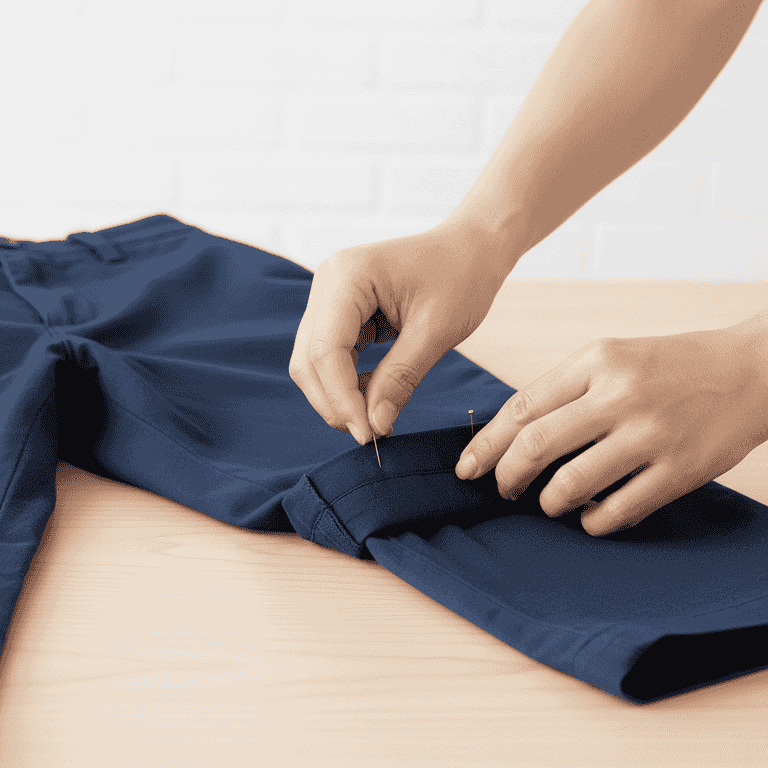
Measure and mark the desired length
10 minutesPut on the pants and shoes you intend to wear with them, then fold the excess fabric inward to your preferred length.
Use straight pins to secure the fold all the way around the leg. Check both legs in a mirror to ensure they are even before removing the pants carefully.
Wear the exact shoes you plan to pair with the pants to ensure the break is perfect.
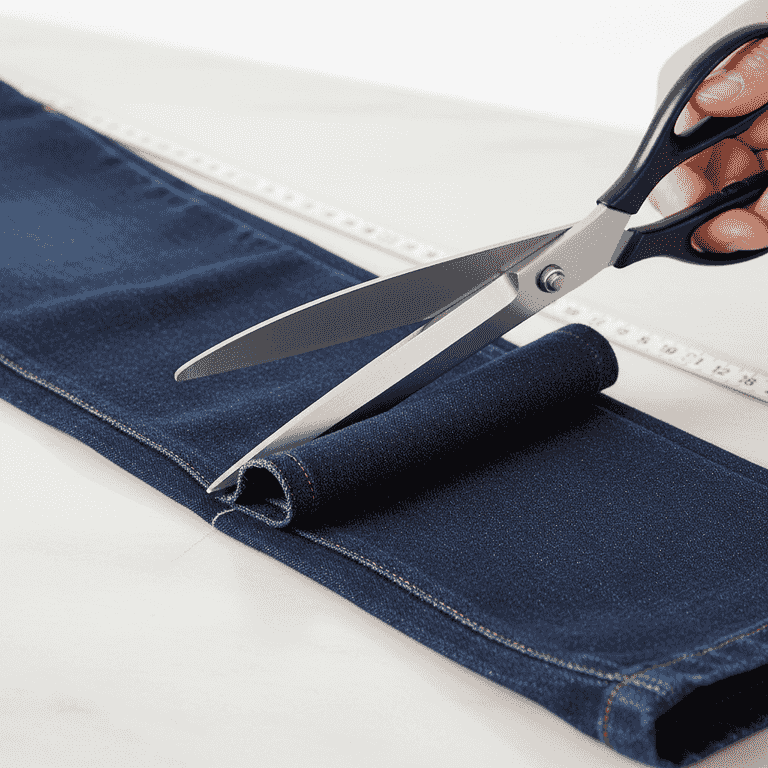
Trim the excess fabric
5 minutesMeasure 1 inch below the pinned fold and cut off the excess fabric using sharp fabric scissors.
Leaving a 1-inch allowance provides enough material to fold over and create a clean edge. Ensure your cut is straight and follows the grain of the fabric.
Ensure you do not cut the front layer of the pants while trimming the back layer.
Use tailor's chalk to draw a straight line before cutting to ensure accuracy.
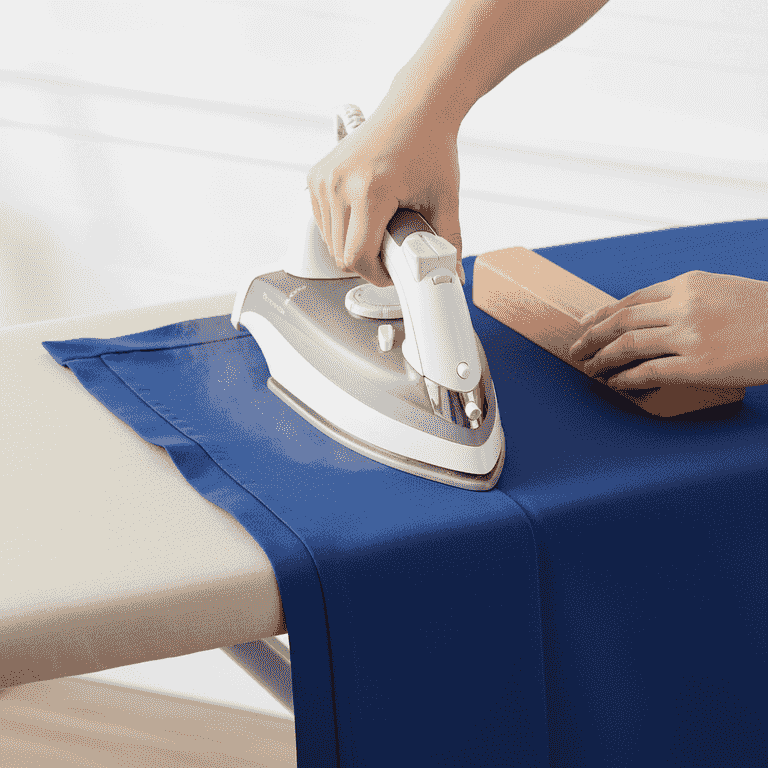
Press the hem fold
5 minutesFold the raw edge under by half an inch, then fold it again to meet your original pin line, and press with a hot iron.
This double-fold technique hides the raw edge inside the hem, preventing fraying. The iron creates a crisp crease that makes hand-sewing much easier.
Always check the fabric care label for appropriate iron heat settings.
Use a damp pressing cloth if your fabric is delicate to prevent scorching.
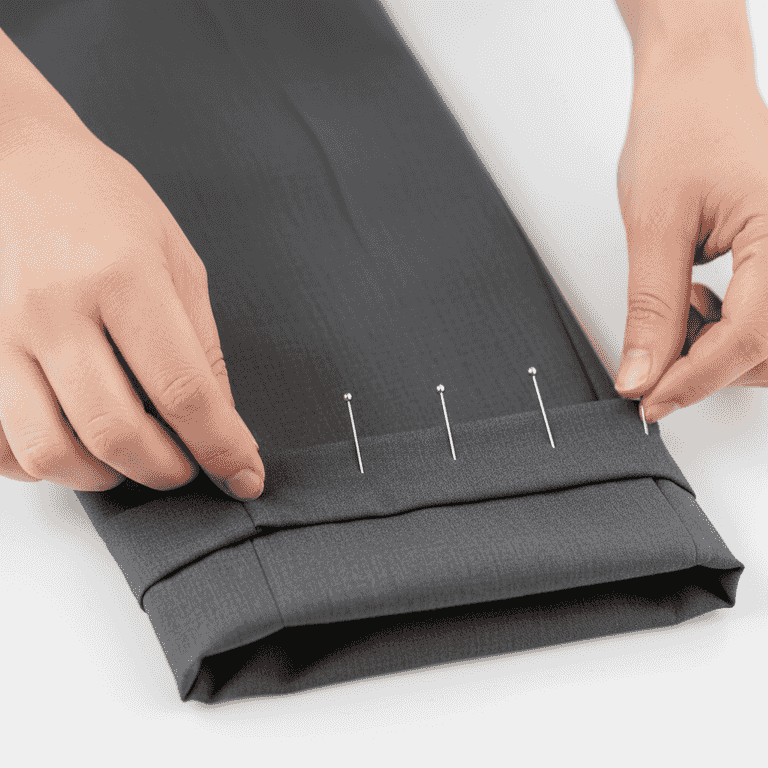
Secure the hem with pins
5 minutesPin the pressed fold in place around the entire circumference of the pant leg.
Placing pins every 2 inches will keep the fabric from shifting while you sew. Ensure the pins are perpendicular to the hemline for easy removal.
Place the pins on the inside of the pant leg so they do not interfere with your needle path.
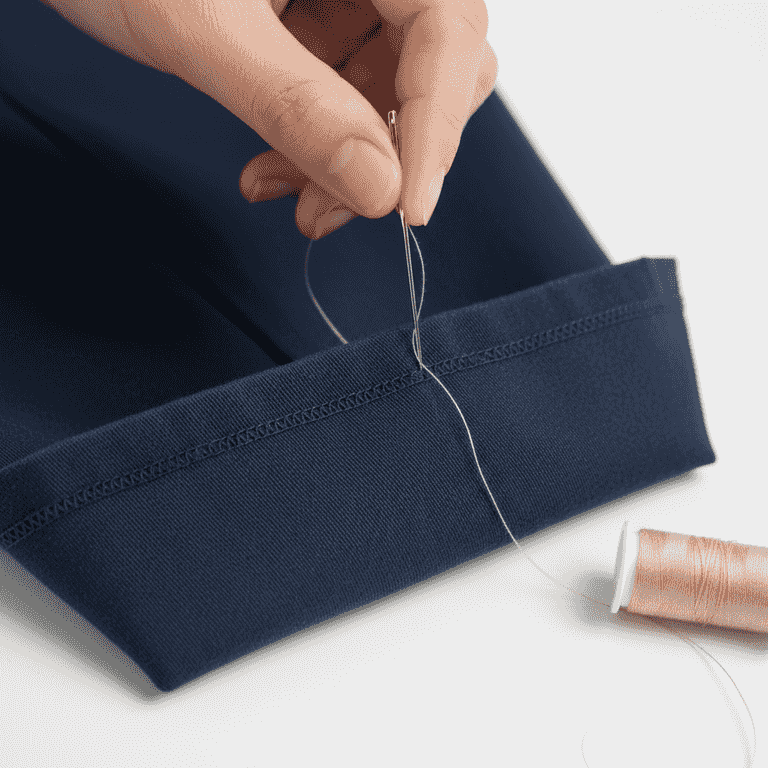
Stitch the hem using a blind stitch
20 minutesUse a needle and thread to perform a blind stitch, catching only a single thread of the outer fabric.
The goal is for the stitches to be nearly invisible from the outside. Alternate between catching a tiny bit of the pant fabric and looping through the hem allowance.
Be careful not to pull the thread too tight, which can cause the fabric to pucker.
Use a shorter thread length to prevent tangles while sewing.
Pro Tips
- ●Always use thread that is a slightly darker shade than your fabric, as it blends better than lighter thread.
- ●Practice your blind stitch on a scrap piece of fabric before starting on your actual garment.
- ●If you are hemming heavy denim, use a thicker, reinforced thread for durability.
- ●Removing the pins one by one as you reach them prevents accidental finger pricks.