
How to Change Differential Fluid
Regularly changing your differential fluid ensures your vehicle's gears remain lubricated and protected from premature wear. This guide walks you through draining old oil and replacing it with fresh fluid for optimal drivetrain performance.
Lift and secure the vehicle
10 minutesRaise the vehicle using a jack and place it securely on jack stands.
Ensure the vehicle is on level ground to allow for accurate fluid level measurement. Confirm the vehicle is stable on the stands before proceeding under the car.
Never rely solely on a hydraulic jack to hold the vehicle's weight.
Check your owner's manual for the correct jack points.
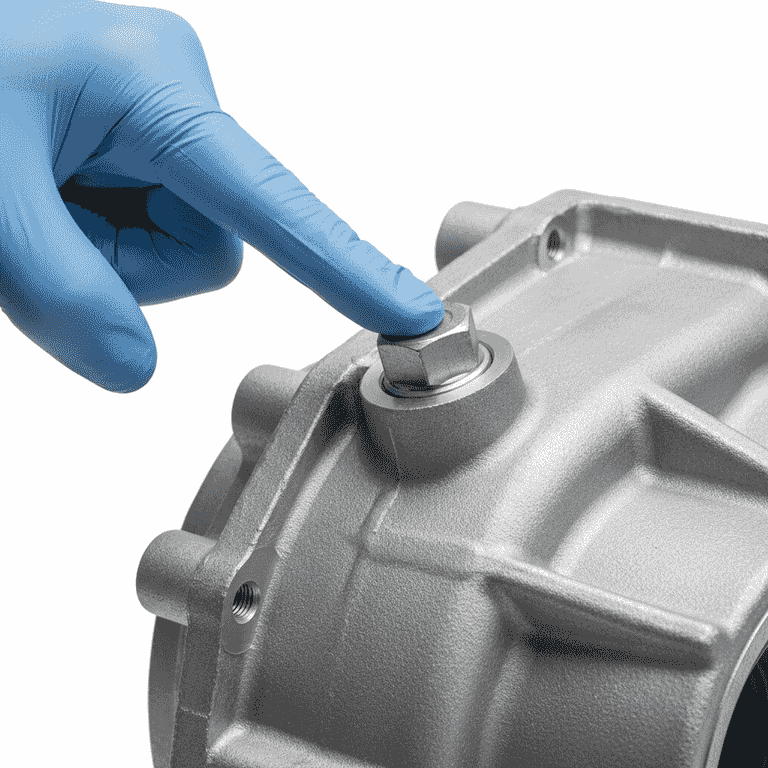
Locate the fill and drain plugs
5 minutesIdentify the fill plug and the drain plug on the differential housing.
The fill plug is usually located higher up on the side of the housing, while the drain plug is at the very bottom. Clean the area around both plugs to prevent dirt from entering the housing.
Always remove the fill plug first to ensure you can actually add new fluid before you drain the old.
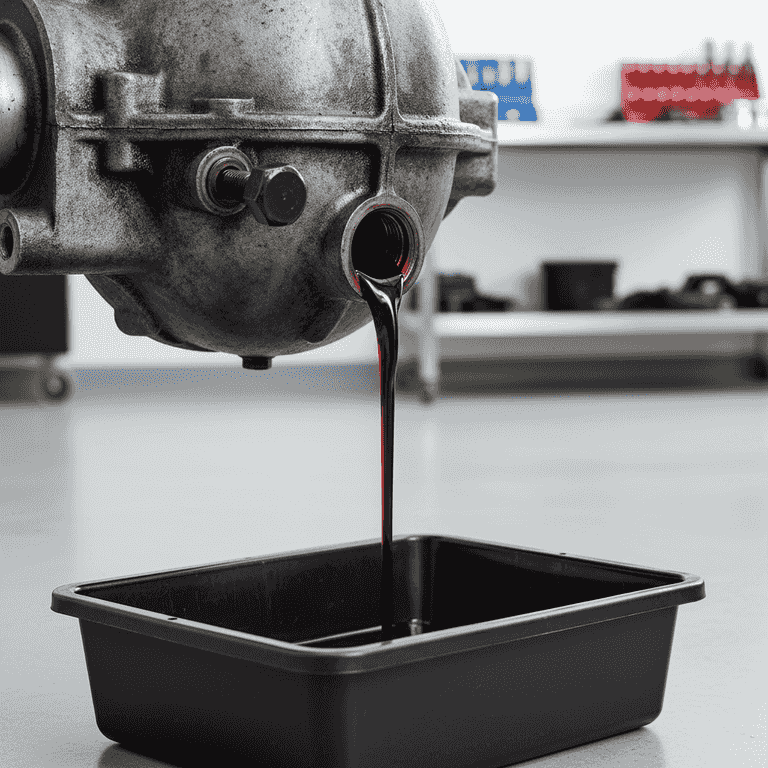
Drain the old fluid
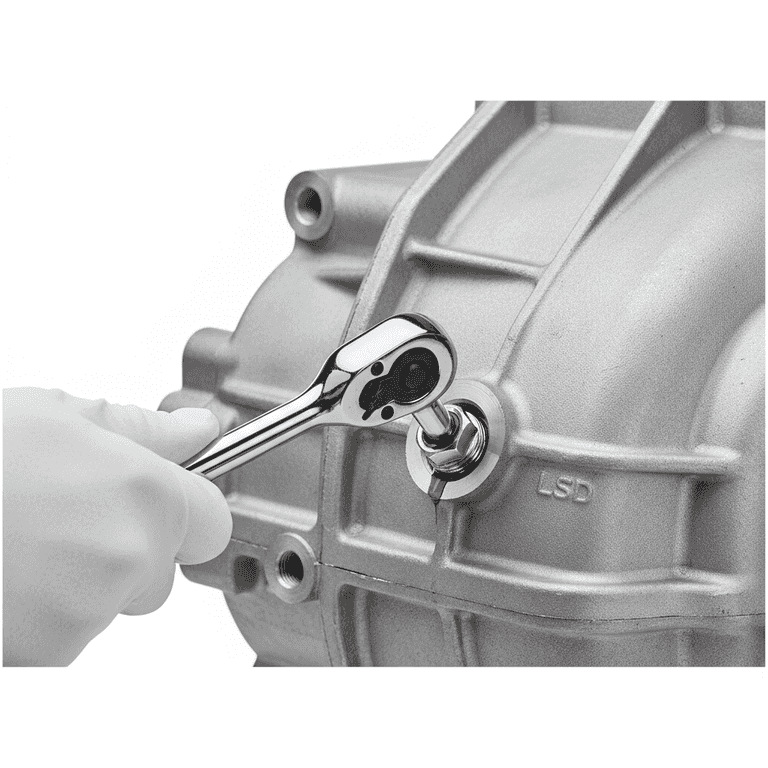
15 minutesPlace the drain pan under the housing and remove the drain plug.
Loosen the drain plug with your socket wrench and allow the old fluid to drain completely into the pan. Be prepared for a steady stream of thick, dark oil.
Used gear oil can be very hot; wear protective gloves.
If the fluid is stuck, use a penetrating oil spray on the threads beforehand.
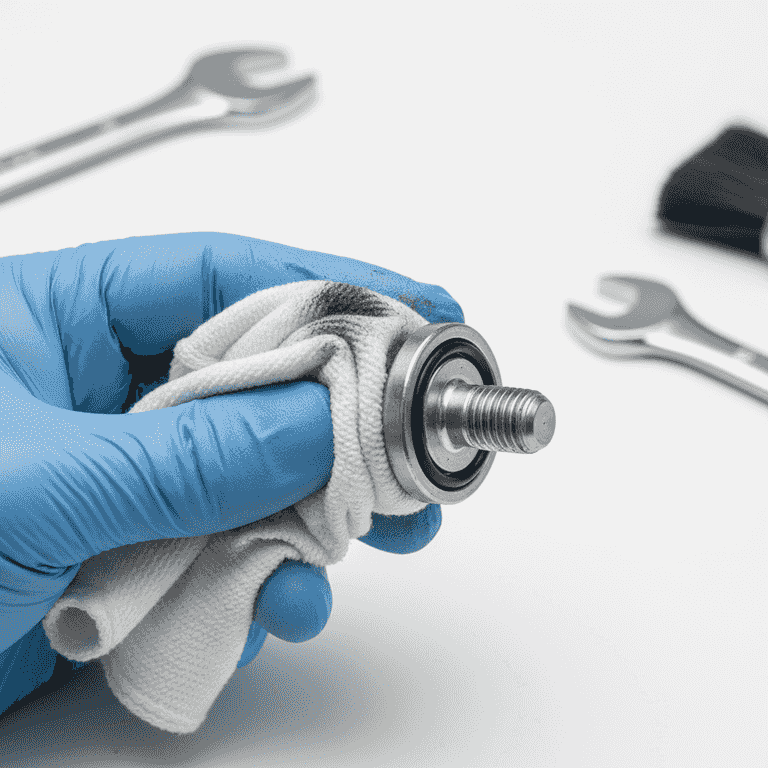
Clean and reinstall the drain plug
5 minutesWipe the drain plug clean and reinstall it into the housing.
Check the magnetic tip of the plug for excessive metal shavings, which could indicate internal damage. Tighten the plug to the manufacturer's specified torque.
Do not overtighten the plug, as this can strip the threads in the aluminum housing.
Replace the crush washer if your vehicle model requires one to prevent leaks.
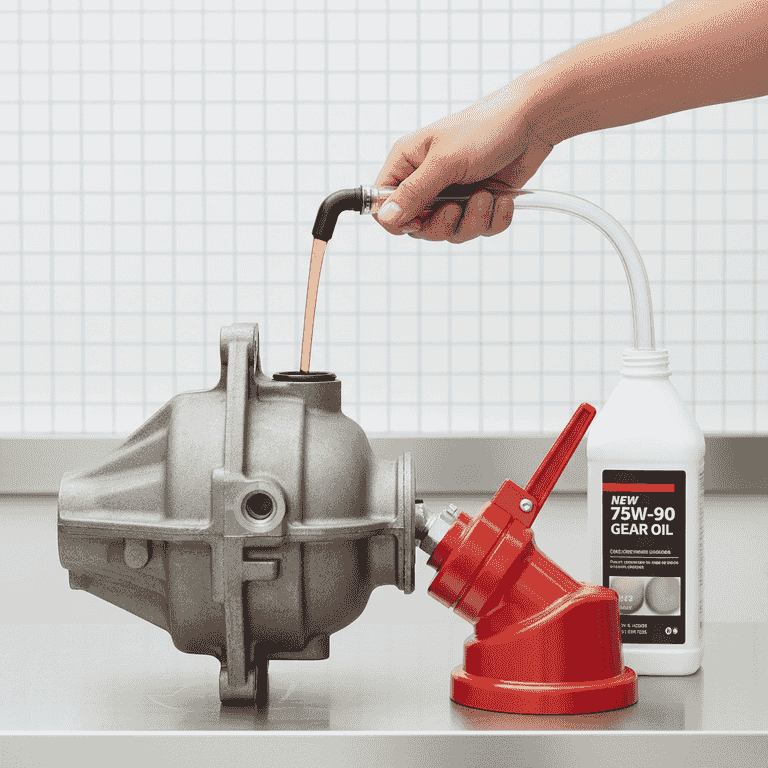
Fill the differential with new fluid
15 minutesInsert the fluid transfer pump into the fill hole and add the specified amount of new gear oil.
Pump the fluid until it begins to trickle out of the fill hole. This 'weeping' method ensures the differential is filled to the correct capacity.
Ensure you are using the correct fluid grade to avoid gear damage.
Check your manual for the exact viscosity and volume requirements.
Secure the fill plug and clean up
5 minutesReinstall the fill plug and wipe away any spilled fluid.
Tighten the fill plug securely. Use your shop rags to clean the differential housing exterior so you can easily spot any potential future leaks.
Take the vehicle for a short drive and re-check the area for any signs of leakage.
Pro Tips
- ●Always check for metal shavings on the magnetic drain plug; a small amount is normal, but large chunks indicate a failing differential.
- ●If you drive in extreme conditions, consider using a high-quality synthetic gear oil for better thermal stability.
- ●Keep a record of the mileage when you changed the fluid to help maintain your vehicle's service schedule.
- ●Dispose of your used gear oil at an authorized recycling center or auto parts store.