
How to Change a Flat Car Tire
Learn the essential skill of changing a flat tire safely and efficiently. This guide walks you through the mechanical process of lifting your vehicle and swapping a damaged tire for a spare.
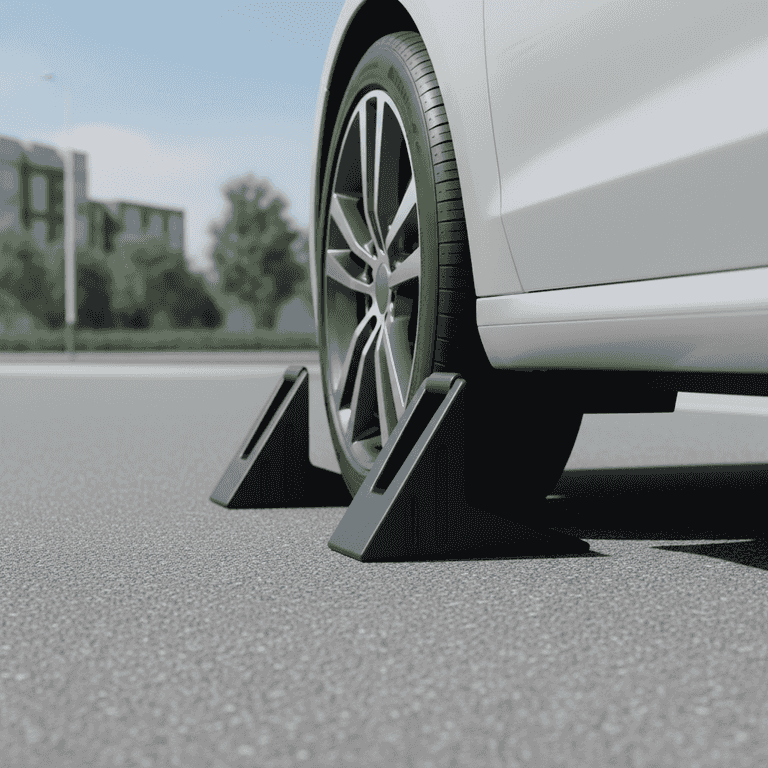
Secure the vehicle
5 minutesPark on a flat surface, engage the parking brake, and place wheel chocks behind the tires opposite the flat.
Parking on a slope can cause the vehicle to shift while on the jack. Chocking the wheels provides extra stability to prevent accidental rolling.
Never change a tire on an incline or soft ground like dirt or grass.
If you don't have chocks, use a heavy rock or a piece of wood.
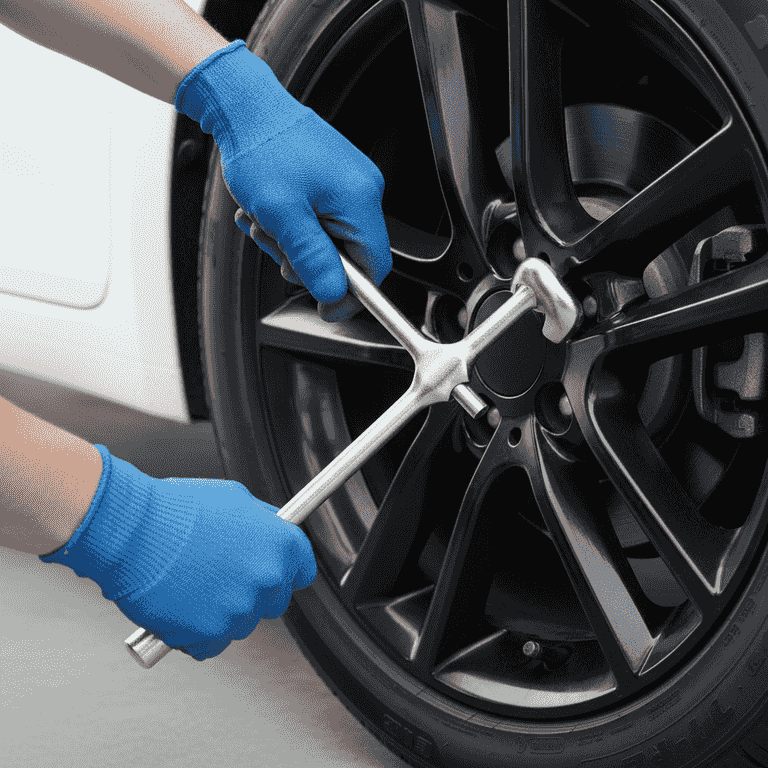
Loosen the lug nuts
5 minutesUse the lug wrench to loosen the lug nuts on the flat tire about one-half turn counter-clockwise.
Do not remove the nuts completely yet. Loosening them while the tire is still on the ground prevents the wheel from spinning as you apply force.
Do not use your foot to kick the wrench, as you may slip or damage the lug nut.
If the nuts are stuck, use your body weight by pressing down on the wrench handle.
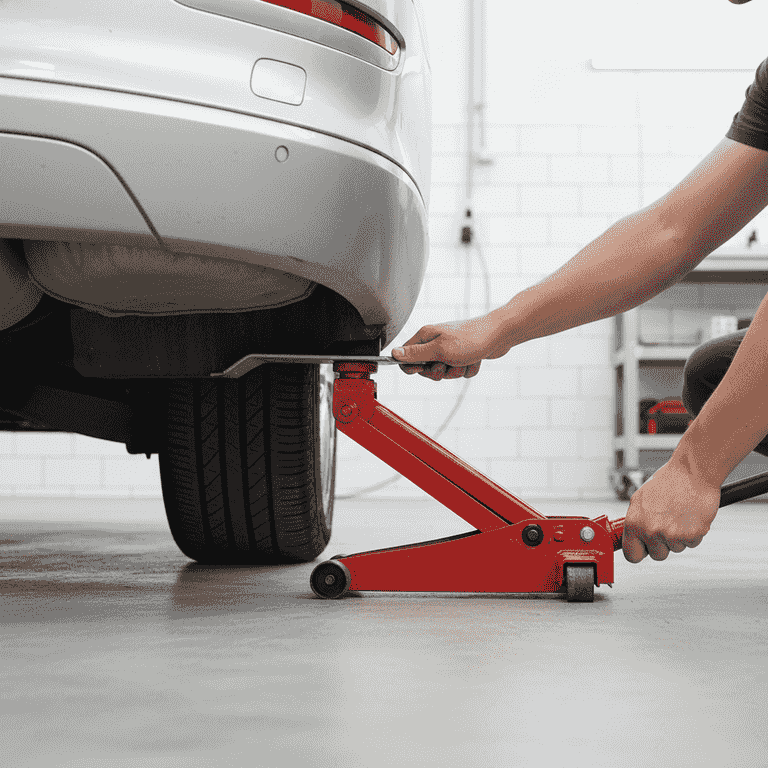
Position the jack
3 minutesConsult your owner's manual to find the designated jack point and place the jack underneath it.
Most vehicles have a reinforced metal frame area near the wheel well. Placing the jack on plastic trim or the floor pan can cause significant body damage.
Improper jack placement can cause the vehicle to collapse.
Check the underside of the car for a small notch or indentation that indicates the jack point.
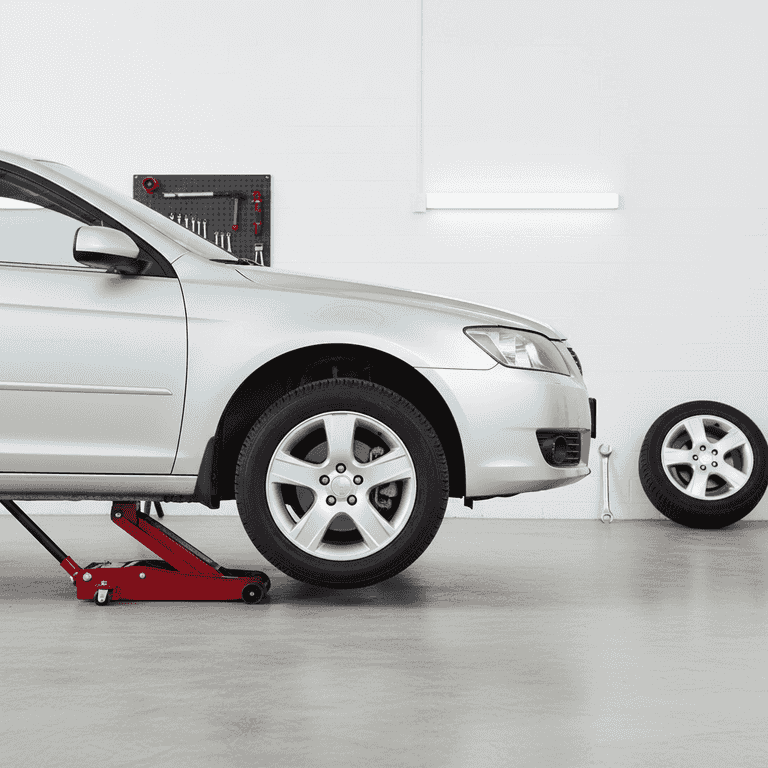
Lift the vehicle
5 minutesOperate the jack to raise the vehicle until the flat tire is about six inches off the ground.
Raise the car slowly and steadily. Ensure the jack remains vertical and does not lean as the car rises.
Never put any part of your body under the vehicle while it is supported only by the jack.
Keep the vehicle as level as possible during the lift.

Remove the flat tire
3 minutesUnscrew the lug nuts completely, remove them, and pull the flat tire off the wheel hub.
Keep the lug nuts together in a safe place, such as your pocket or a clean cloth. Once the nuts are off, pull the tire straight toward you until it clears the bolts.
The tire may be heavier than expected; use your legs to lift, not your back.
Lay the flat tire on its side under the vehicle frame as a secondary safety measure.
Mount the spare tire
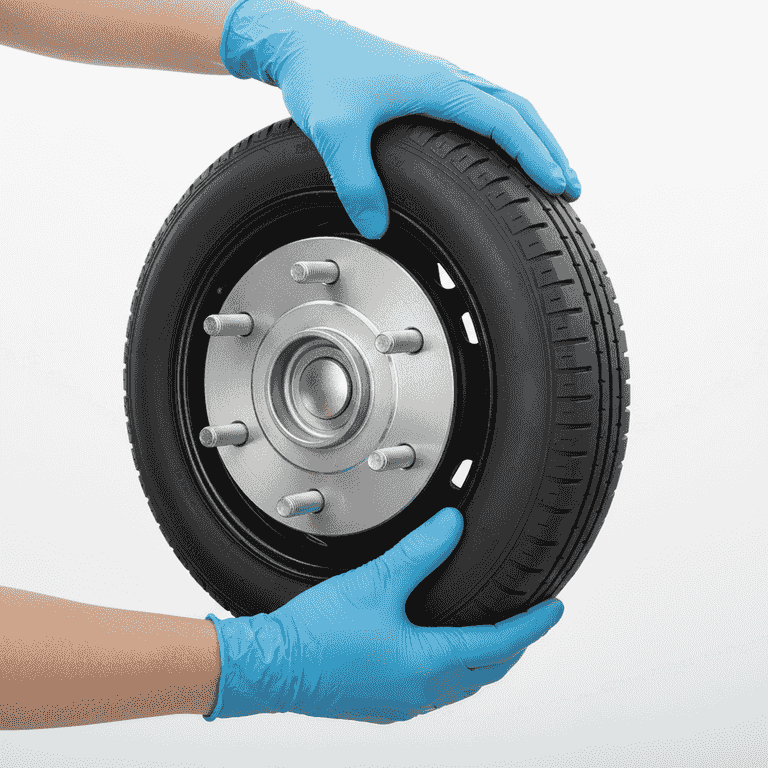
4 minutesAlign the rim of the spare tire with the wheel bolts and push it onto the hub until it sits flush.
Ensure the valve stem is facing outward. Replace the lug nuts and tighten them by hand in a star pattern until they are snug.
Do not tighten the lug nuts with the wrench while the car is in the air, as it could knock the car off the jack.
A star pattern ensures the wheel is seated evenly against the hub.
Lower and tighten
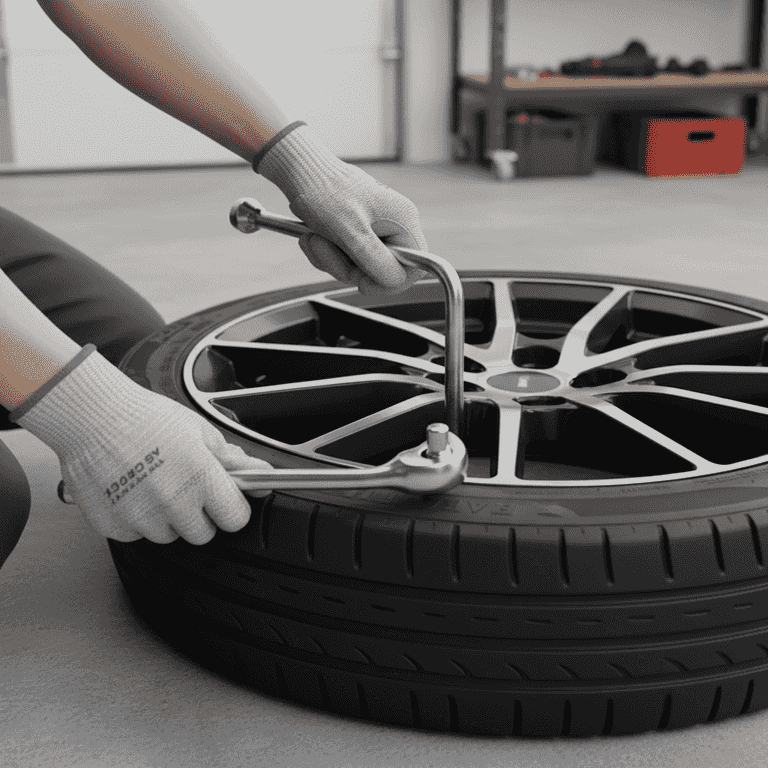
5 minutesLower the vehicle until the tire touches the ground, then use the wrench to fully tighten the lug nuts.
Tighten the nuts in a star pattern to ensure even pressure. Once the car is fully lowered and the jack is removed, double-check that all nuts are as tight as possible.
Loose lug nuts can lead to the wheel detaching while driving.
Use your full body weight to ensure the lug nuts are secure after the car is back on the ground.
Pro Tips
- ●Check your spare tire's pressure regularly; a flat spare is useless in an emergency.
- ●Keep a pair of work gloves and a flashlight in your trunk for easier, cleaner night repairs.
- ●Practice changing a tire in your driveway once so you aren't learning in the dark or rain.
- ●If you have a locking lug nut, ensure you have the specific key tool in your vehicle.