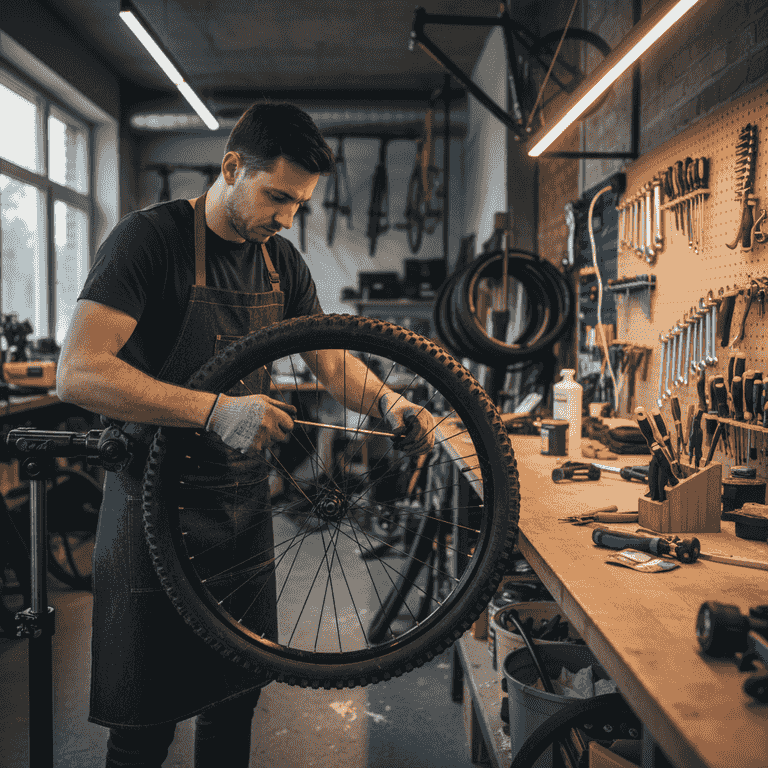
How to Change a Bicycle Tire
Learn how to efficiently replace a punctured or worn-out bicycle tire. This guide covers the entire process from wheel removal to tire installation and re-inflation.
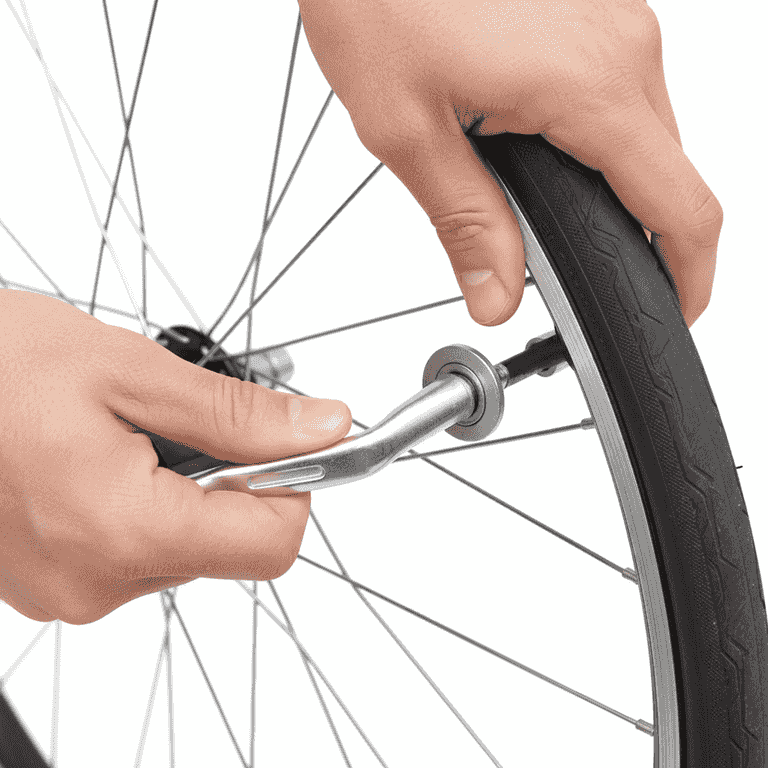
Remove the wheel
3-5 minutesShift the chain to the smallest cog if removing the rear wheel, then open the quick-release lever or unscrew the axle nuts.
Lift the bicycle frame so the wheel drops out of the dropouts. If you have rim brakes, you may need to release the brake cable tension first to allow the tire to pass through.
Be careful not to damage the derailleur when removing the rear wheel.
Flip your bike upside down onto the handlebars and seat for easier access if you don't have a repair stand.
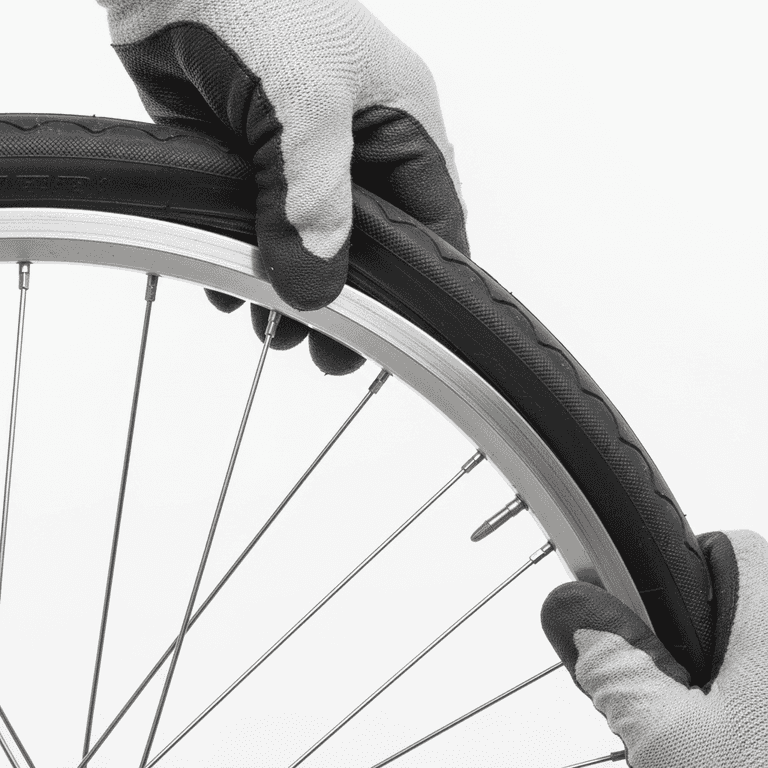
Deflate and unseat the tire
2 minutesRelease all remaining air from the inner tube and push the tire bead toward the center of the rim.
Pushing the bead into the center channel of the rim gives you more slack to work with. This makes it significantly easier to insert the tire lever.
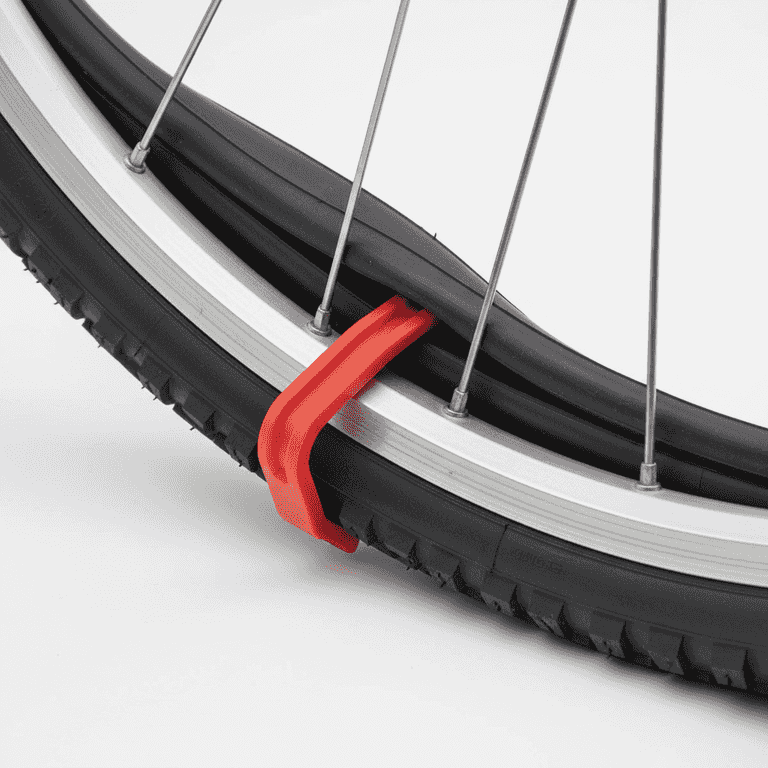
Pry the tire off
5 minutesInsert the tire lever under the edge of the tire bead and hook it onto a spoke.
Use a second lever to slide along the rim, peeling the bead off the edge. Once a section is off, you can usually run the lever around the circumference to remove the rest.
Avoid using metal screwdrivers as they can scratch the rim and damage the tire.
If the tire is very tight, use a second or third lever to keep the bead from snapping back into place.
Remove the old tube
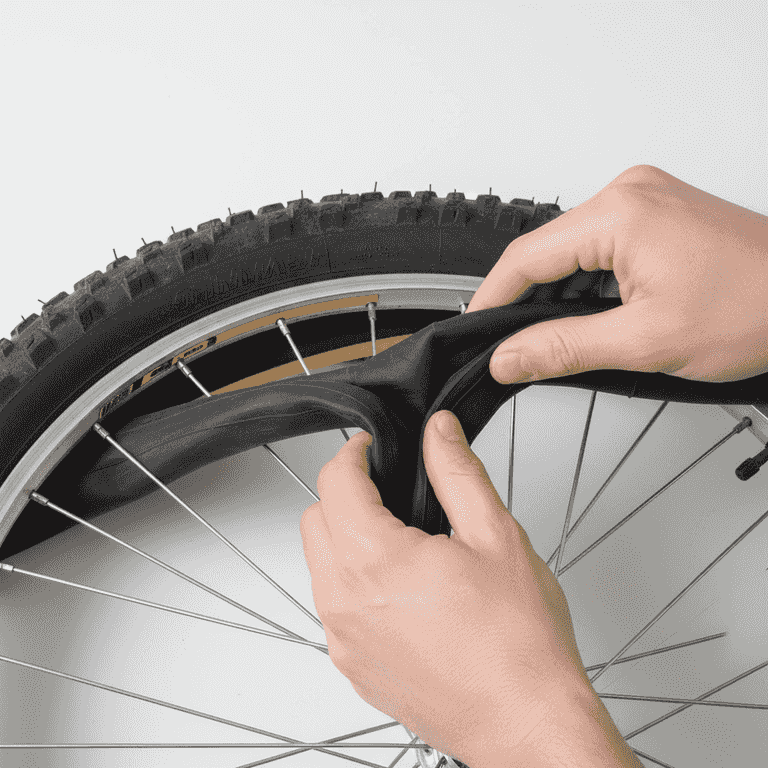
2 minutesPull the inner tube out from inside the tire, starting at the valve stem.
Inspect the inside of the tire casing for the object that caused the puncture, such as thorns or glass, to prevent the new tube from popping immediately.
Be careful of sharp objects like glass or wire thorns that may still be embedded in the tire tread.
Run your fingers carefully along the inside of the tire casing to feel for sharp debris.
Install the new tube
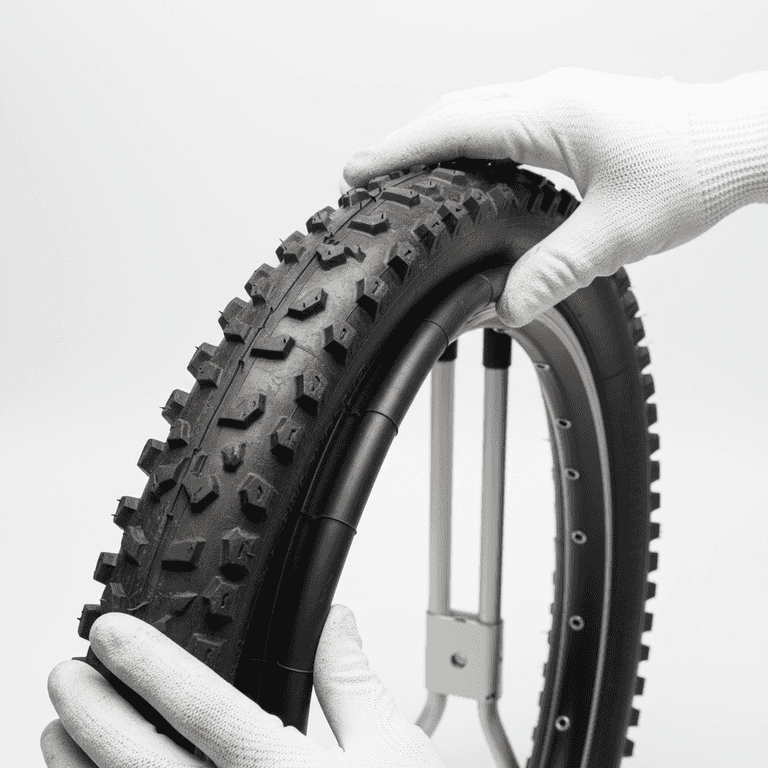
3 minutesInflate the new tube just enough to give it shape, then tuck it into the tire.
Start by inserting the valve stem through the rim hole, then work the tube into the tire casing all the way around. This prevents the tube from twisting.
A slightly inflated tube is much less likely to get pinched between the tire and the rim during installation.
Reseat the tire
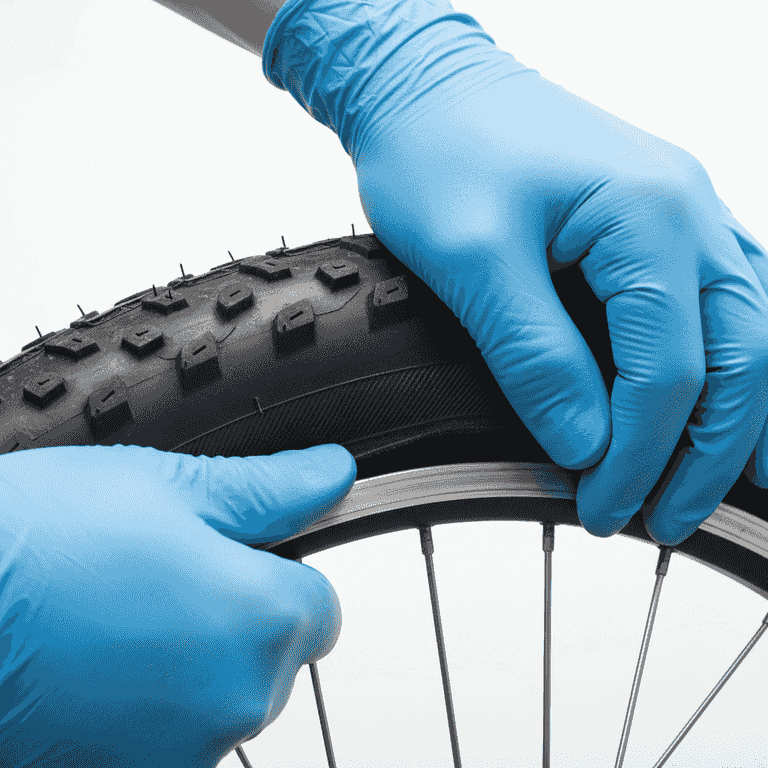
4 minutesUse your thumbs to push the tire bead back onto the rim, working from the valve stem outward.
When you get to the final few inches, it will become difficult. Use the heels of your hands to roll the remaining bead over the rim edge.
Do not use tire levers to force the final section of the tire on, as this can easily pinch and puncture the new tube.
Ensure the tube is completely inside the tire and not trapped under the bead before finishing.
Inflate and remount
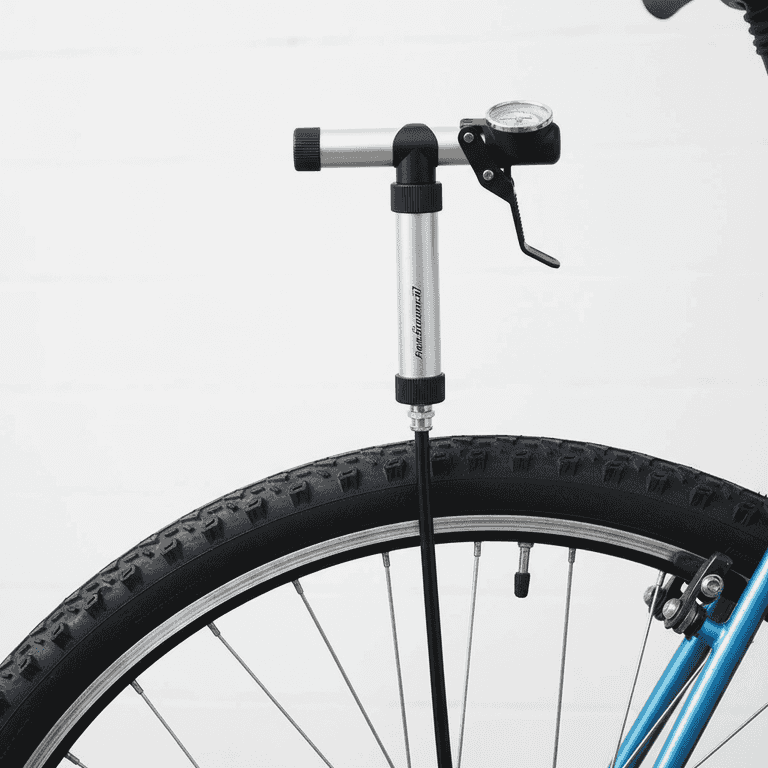
3 minutesInflate the tire to the recommended pressure and reinstall the wheel onto the bike frame.
Check that the tire is seated evenly around the rim. Tighten your axle nuts or quick-release lever, and ensure the wheel spins freely without rubbing the brakes.
Always double-check that your quick-release or thru-axle is tight before riding.
Check the sidewall of your tire for the recommended PSI range.
Pro Tips
- ●Always carry a spare tube and a patch kit on longer rides.
- ●Check your tire pressure before every ride to prevent pinch flats.
- ●Talcum powder on a new tube can help it seat better inside the tire.
- ●If the tire is difficult to seat, ensure the bead is pushed deep into the center channel of the rim.