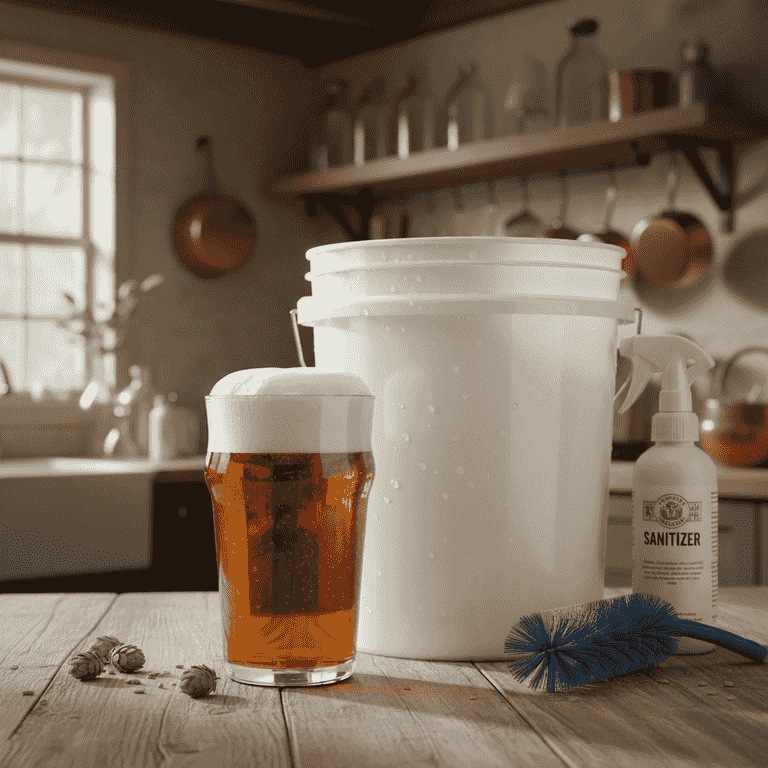
How to Brew Beer at Home (Extract Method)
Brewing your own beer is a rewarding blend of science and art that allows you to craft custom ales in your kitchen. This guide covers the extract brewing method, which is the perfect entry point for beginners to master the fundamentals of fermentation.
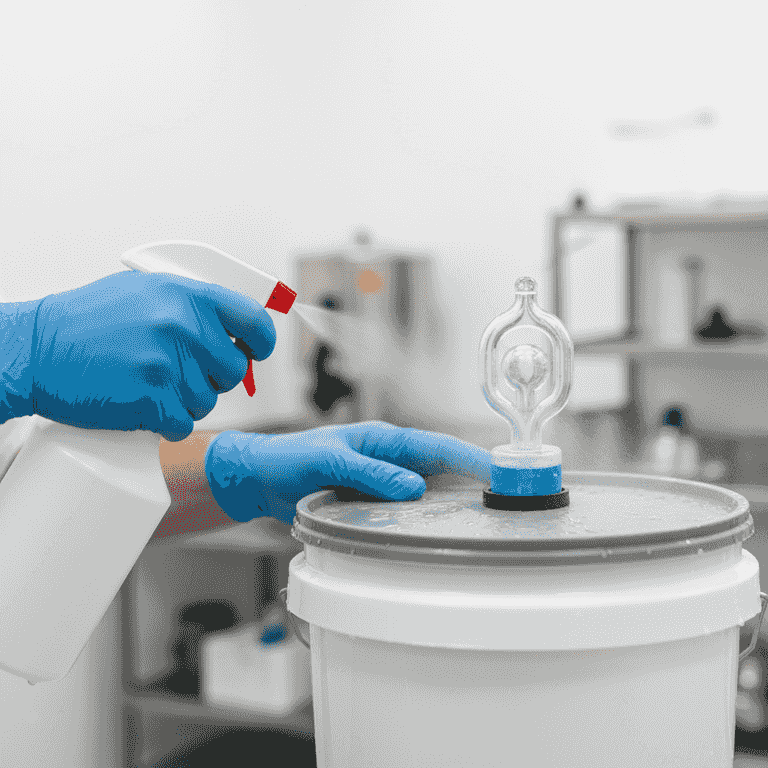
Sanitize all equipment
20 minutesClean and sanitize every piece of equipment that will touch the beer after the boil.
Contamination is the number one cause of bad homebrew. Use a no-rinse sanitizer according to the manufacturer's instructions to ensure your equipment is sterile.
Do not skip this step, or your beer may develop off-flavors.
Mix your sanitizer in a spray bottle for easy application on small parts.
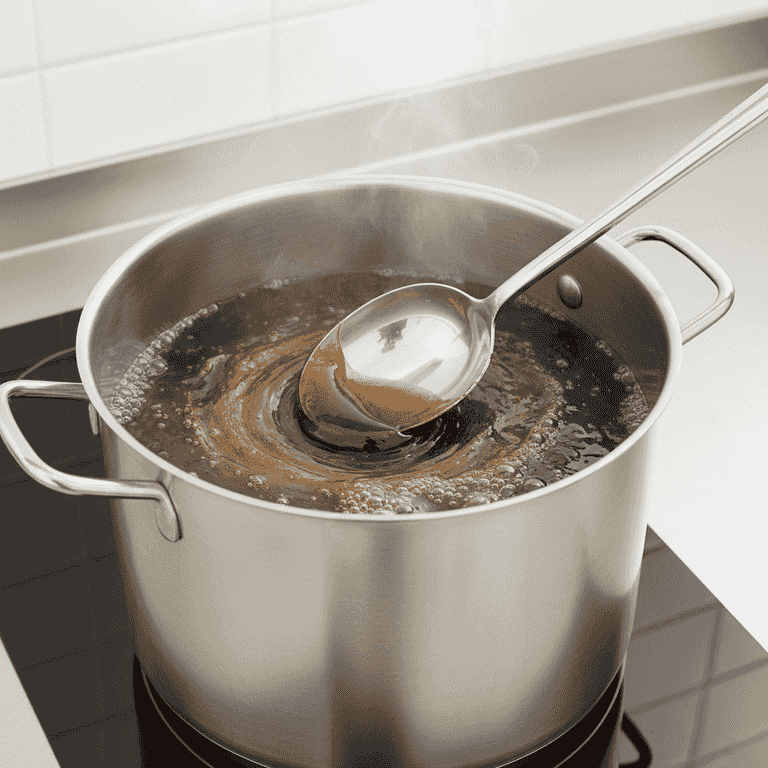
Boil the wort
60 minutesBring water to a boil in your brew kettle and stir in the malt extract.
Dissolve the malt extract completely to prevent scorching on the bottom of the pot. Once dissolved, bring the mixture to a rolling boil to begin the hop addition process.
Watch for a 'boil-over' when the wort first starts to boil; keep a spray bottle of water handy to knock down foam.
Turn off the heat while stirring in the extract to prevent burning.
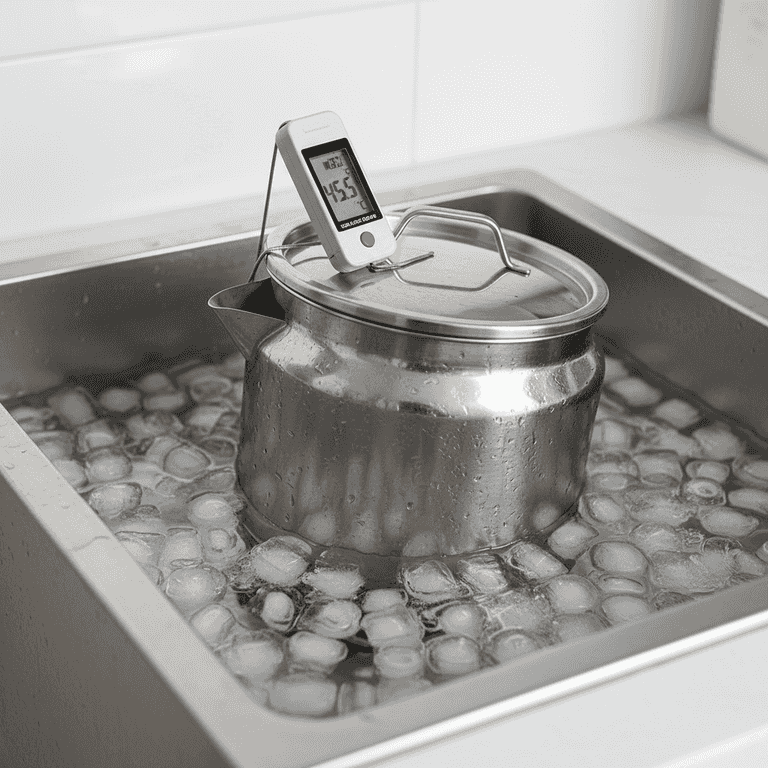
Cool the wort
30 minutesRapidly cool the boiled wort to room temperature.
Place the kettle in an ice bath in your sink. Cooling quickly helps clarify the beer and prepares the environment for the yeast.
Do not add yeast while the wort is hot, as high temperatures will kill the yeast cells.
Use a digital thermometer to monitor the temperature; aim for 68-70°F.
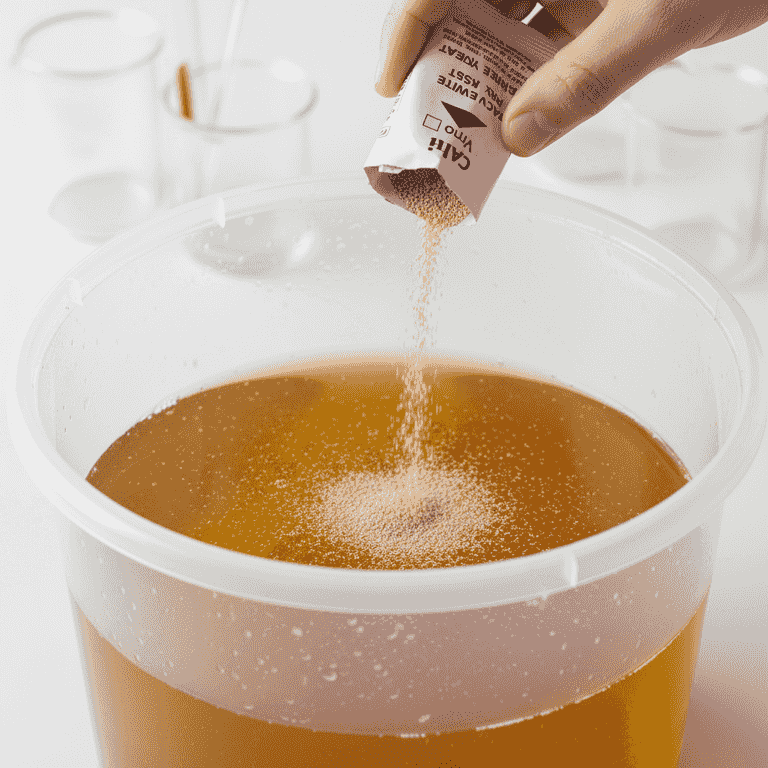
Pitch the yeast
10 minutesTransfer the cooled wort to the sanitized fermentation bucket and add the yeast.
Pour the wort into the bucket, ensuring it splashes slightly to aerate the liquid. Sprinkle the yeast packet contents evenly over the surface.
Ensure your hands are sanitized before touching the yeast packet or bucket lid.
Ensure the wort is below 75°F before pitching to ensure healthy fermentation.
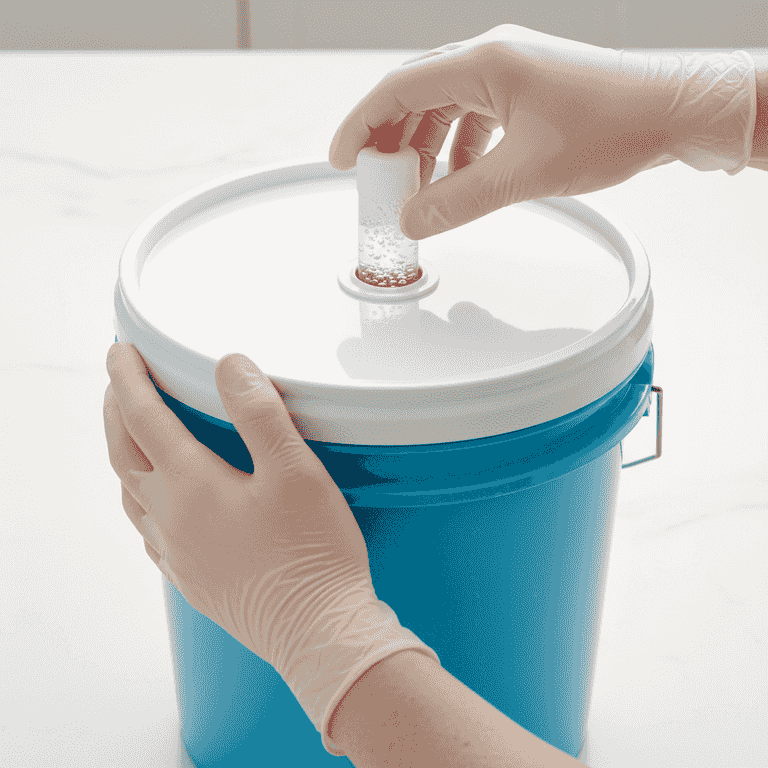
Seal and ferment
5 minutesAttach the lid and airlock to the fermentation bucket.
The airlock allows carbon dioxide to escape during fermentation without letting oxygen or bacteria inside. Place the bucket in a dark, temperature-stable area.
Do not open the bucket during the first few days of active fermentation.
Fill the airlock with a small amount of sanitizer or vodka.
Pro Tips
- ●Keep a detailed brewing journal to track your ingredients and results for future adjustments.
- ●Maintain a steady fermentation temperature to prevent yeast stress and off-flavors.
- ●Always use fresh ingredients, especially hops and yeast, for the best aroma.
- ●Be patient; let the beer condition for at least two weeks before bottling.